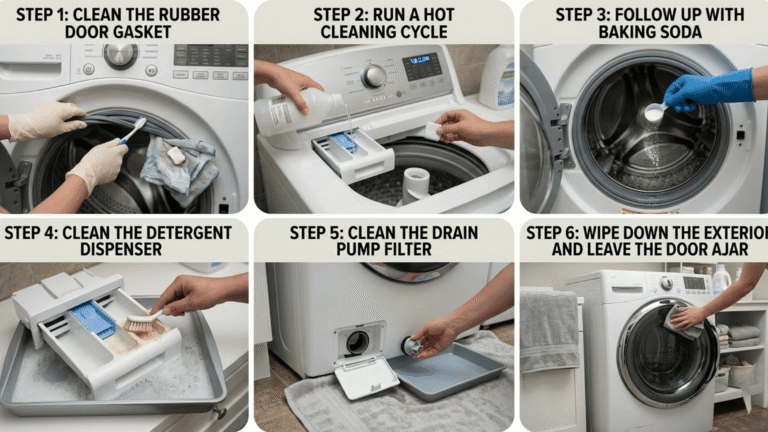
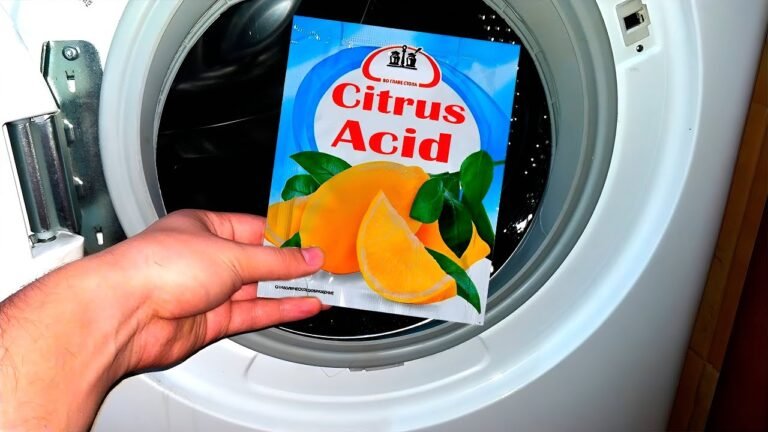
Cleaning Basics: Why Baking Soda and Vinegar?
Baking soda and vinegar are popular natural cleaning agents. They help remove grime, mold. And odors inside washing machines without harsh chemicals. Their interaction causes pH neutralization that breaks down detergent buildup and mildew. This method is also eco-friendly and safe for most washer types.
To learn more about maintaining your washer’s parts, check out this guide on how to clean whirlpool washing machine drain filter. Proper maintenance extends the washing machine lifespan and keeps it fresh.
Cleaning frequency is key. Experts say doing this every 1-3 months prevents odor buildup and mold growth, especially in front load washers that trap moisture in seals and drums.
Exact Amounts: Baking Soda and Vinegar Measurements
Knowing how much baking soda and vinegar to use is crucial. Too little won’t clean well. Too much can leave residue or harm the seal. Industry consensus shows these amounts work best:
- ✅ Baking soda measurement: 1/2 cup (about 120 grams).
- ✅ White vinegar volume: 2 cups (about 480 ml) at 5% acidity, the best vinegar concentration for cleaning washer drums naturally.
These amounts suit most washers, including front load and top load models. Avoid stronger vinegar concentrations that might damage rubber seals.
Remember, adding baking soda and vinegar at the same time causes fizzing but less cleaning power. It’s better to add them during separate cleaning stages.
📌 Step-by-Step Guide: Using Baking Soda and Vinegar in Washer
Follow these steps to deodorize and clean your washing machine drum naturally:
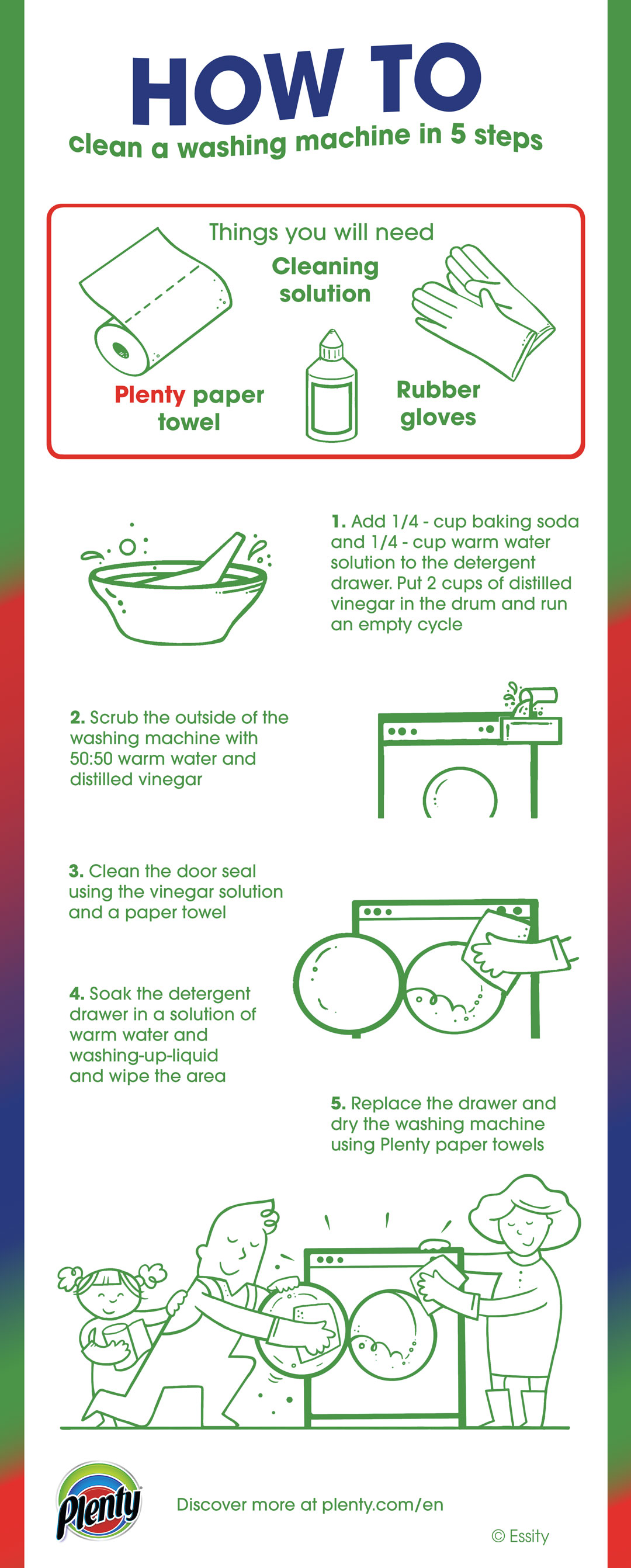
- Measure and add 1/2 cup of baking soda directly into the drum.
- Run the washer on the hottest and longest cleaning cycle available.
- Once the cycle starts, add 2 cups of white vinegar through the detergent dispenser or directly into the drum.
- Let the machine complete the cycle including the rinse stage to flush residues.
- Wipe the rubber seal and detergent drawer with a vinegar solution to remove mold and grime.
This process removes detergent residue, odors. And grease effectively. For detailed methods on cleaning front loaders, see clean front loading washing machine with vinegar.
Why Add Baking Soda and Vinegar Separately?
The reaction between vinegar and baking soda produces carbon dioxide gas and water. This fizzing helps break grime but reduces their cleaning power if mixed too soon. Adding baking soda first softens water and lifts grime. Adding vinegar later helps to kill bacteria and remove odors.
Moreover, this approach protects the washing machine’s seal and drum. Adding vinegar too early or in large amounts can wear rubber parts. Using careful measurements ensures cleaning safety precautions are met.
Cleaning Different Washing Machine Types
Top load and front load washers have different cleaning needs. Front loaders trap more moisture and grime in seals, requiring more frequent cleaning. Top loaders may accumulate detergent buildup in agitators and filters.
Here is a quick table summarizing baking soda and vinegar use for both types:
| Washer Type | Baking Soda Amount | Vinegar Amount | Cleaning Tips |
|---|---|---|---|
| Front Load Washer | 1/2 cup (120 g) | 2 cups (480 ml) | Wipe rubber seal regularly. use hottest cycle. |
| Top Load Washer | 1/2 cup (120 g) | 1.5 cups (360 ml) | Clean agitator and filters monthly. |
Adjust vinegar volume slightly for top loaders as they hold more water. Using warm or hot water improves mildew and mold removal vinegar efficiency.

Washing Machine Maintenance Tips
Besides regular cleaning cycles, follow these tips to keep your washing machine fresh:
- Leave the door or lid open after use to let the drum dry.
- Clean detergent dispensers monthly to avoid build-up.
- Check and clean drain filters every few months.
- Use pH neutral detergents to reduce residue.
For drain filter care, see this useful guide on cleaning Whirlpool washing machine drain filter. Proper care reduces mold and grime buildup inside the machine.
Detergent Residue Removal: Vinegar and Baking Soda Combo
Detergent residue often causes odors and grime. Baking soda acts as a mild abrasive to scrub residue away. Vinegar dissolves mineral deposits and kills bacteria causing smell. Used together during cleaning cycles, they restore the washing machine interior cleaning solution’s freshness.
Be cautious about the water temperature. Hot water enhances the reaction and cleaning power but may degrade some machine parts over time. Using recommended cleaning frequency balances cleaning benefits with machine lifespan.
⚖️ Pros & Cons: Baking Soda and Vinegar Cleaning Hack
| Pros | Cons |
|---|---|
| Natural and non-toxic cleaning agents. | Fizzing reaction reduces cleaning power if mixed together early. |
| Effective for odor removal and mild mold control. | Excess vinegar can damage rubber seals over time. |
| Cheap and widely available ingredients. | Not a substitute for professional washer maintenance. |
For a deeper understanding of this mechanic, analyzing resources on vinegar and baking soda washing machine cleaning recipe provides excellent foundational context.
Conclusion: Best Practices for Baking Soda and Vinegar Washing Machine Cleaning
Using the right amount of baking soda (1/2 cup) and vinegar (2 cups) in separate stages cleans your washing machine effectively. This natural method removes odor, mold. And detergent buildup safely and is environmentally friendly. Follow recommended cleaning frequency every 1-3 months and take care of seals and filters.
Always use hot water settings for best results and wipe seals after cleaning. Avoid mixing baking soda and vinegar too early to maximize their cleaning power. These steps help extend your washing machine’s lifespan and keep your laundry fresh.
For more cleaning tips, explore how to clean your washer drain filter for deeper maintenance and longer machine life.
Frequently Asked Questions
How often should I clean my washing machine with baking soda and vinegar?
Industry experts recommend cleaning your washing machine every one to three months to prevent odor, mold, and detergent buildup.
What is the right amount of baking soda to use in a washer clean?
About half a cup (120 grams) of baking soda is ideal for washing machine grime removal without causing residue.
How much vinegar should be added to clean a front load washing machine?
Use about two cups (480 ml) of white vinegar, which is the best vinegar concentration for cleaning washer drums naturally.
Can vinegar and baking soda be used together safely in a washer?
Yes, but they react chemically, so it’s best to add them separately during different stages of the cleaning cycle for effective pH neutralization.
What cleaning cycle should I use for washing machines with vinegar and baking soda?
Use the hottest water setting on a cleaning cycle or empty wash cycle, followed by a rinse cycle to remove residues.

Michael Peterson is a home appliance writer focused on practical washing machine care, maintenance, and troubleshooting. He shares simple, reliable tips to help readers keep their washing machines running efficiently, avoid common problems, and extend appliance life.