Importance of Cleaning Commercial Ice Machines
Commercial ice machines produce ice that people use daily. Keeping these machines clean is key for safety. Dirty ice makers can grow bacteria and mold. This can cause health risks and poor ice quality. Regular cleaning stops contamination and keeps ice safe to use.
Industry consensus shows that a good cleaning schedule helps avoid biofilm and scale buildup. These build-ups harm the machine and the ice. For a deeper understanding of this mechanic, analyzing resources on ice machine cleaning frequency provides excellent foundational context.
Proper maintenance also extends the life of the machine. Neglecting cleaning can cause costly repairs and early replacement. Thus, the importance of a solid maintenance of ice makers routine cannot be overstated.
Recommended Cleaning Frequency
The general rule for commercial ice machines is cleaning every 2 to 4 weeks. This frequency varies based on usage and water quality. High-use machines or those with hard water may need more frequent cleaning.
Health regulations and manufacturer instructions often set minimum cleaning intervals. Operators should always follow these guidelines. A cleaning checklist ensures no part is missed in the process.
Signs the machine needs cleaning sooner include odd smells or cloudy ice. These signs indicate bacterial or mold growth and require immediate action.
To help maintain hygiene, here is a quick guide on cleaning frequency:
Cleaning Schedule Summary:
- ✅ Light use: every 4 weeks
- ✅ Heavy use: every 2 weeks
- ✅ Visible contamination: immediate cleaning
Regular sanitization also plays a vital role. Proper ice machine sanitization frequency ensures the ice remains safe from germs.
The Ice Machine Cleaning Process
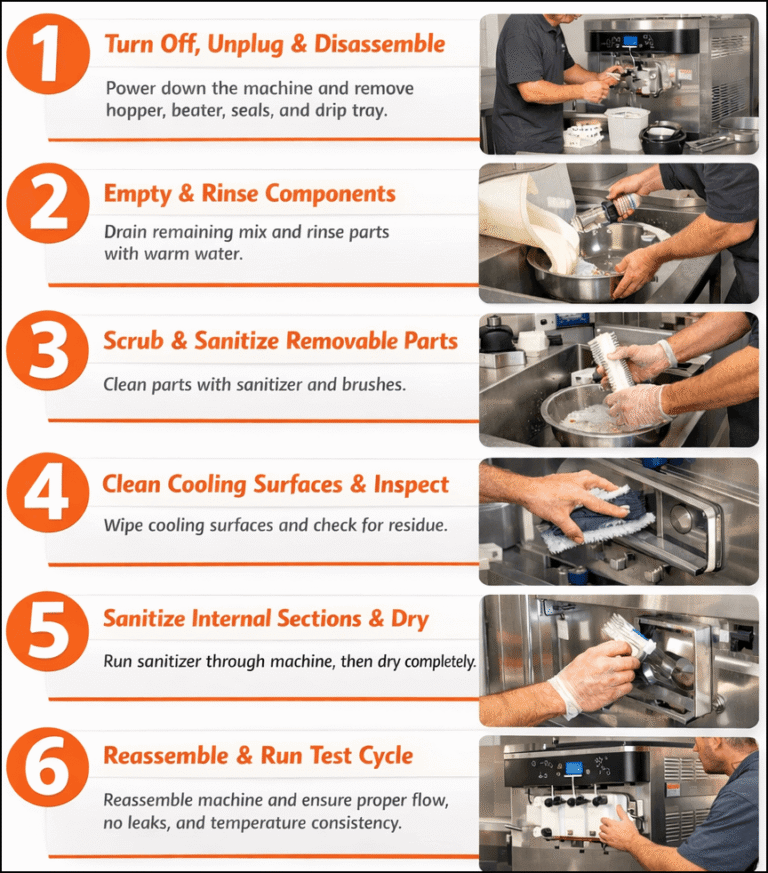
Cleaning a commercial ice machine involves several steps. First, the machine must be turned off and emptied. Next, filters and water lines should be cleaned or replaced.
Using approved ice machine cleaning chemicals is crucial. These chemicals remove scale and kill bacteria. Following manufacturer instructions ensures safe and effective cleaning.
The process includes scrubbing the ice bin and all accessible parts. Rinsing thoroughly removes any chemical residue. Finally, the machine is sanitized and restarted to produce clean ice.
Most operators use a checklist to track each step. This checklist helps maintain consistent and thorough cleaning.
✅ Ice Machine Cleaning Checklist
- Turn off and unplug machine
- Remove and clean filters
- Flush and clean water lines
- Apply cleaning chemical to ice maker parts
- Scrub ice bin and surfaces
- Rinse all parts well
- Sanitize ice storage area
- Reassemble and restart machine
Ice Machine Maintenance Tips
Beyond cleaning, regular maintenance prevents issues. Checking and replacing filters keeps water pure. Cleaning water lines stops scale and biofilm buildup. These steps improve ice taste and machine function.
Operators should also inspect the machine for leaks or damage. Prompt repairs avoid bigger problems and contamination. Preventive maintenance saves money and ensures ice safety.
Following operator guidelines and manufacturer advice is best. For example, knowing how often to clean espresso machine offers insights into maintaining other food service equipment with regular cleaning.
Preventing Ice Machine Contamination
Bacterial growth and mold are the main concerns for ice machine hygiene. Contamination usually starts in dirty filters or water lines. Also, ice bins not cleaned allow mold to grow.
Good practices include frequent cleaning and sanitizing. Using proper cleaning chemicals is essential to kill microbes. Keeping the machine dry when not in use also helps prevent mold.
Staff training on commercial ice machine hygiene supports these efforts. Operators aware of signs ice machine needs cleaning can act fast to prevent risks.
Signs Your Ice Machine Needs Cleaning
Knowing when to clean the ice machine is vital. Common signs include:
- Unpleasant or strange odors
- Cloudy or bad-tasting ice
- Visible mold or slime in the ice bin
- Slower ice production
Ignoring these signs risks health and can cause machine damage. Regular checks help catch problems early.
To assist operators, here is a table outlining these signs with possible causes:
| Sign | Possible Cause |
|---|---|
| Strange odor | Biofilm or mold buildup |
| Cloudy ice | Mineral scale or bacteria |
| Visible mold | Poor cleaning or drying |
| Slow ice production | Clogged filters or lines |
Ice Machine Cleaning Best Practices
Experts agree on several best practices. Always use chemicals approved for ice machines. Follow manufacturer instructions closely. Clean all parts, including hard-to-reach areas.
Maintain a cleaning log to track dates and actions. This helps meet ice machine sanitation standards and health rules. Avoid skipping cleaning even if the machine looks clean.
Also, schedule deep cleaning by professionals periodically. This ensures thorough removal of biofilm and scale buildup.
Below is a table summarizing key best practices:
| Practice | Reason |
|---|---|
| Use approved cleaning chemicals | Safe and effective cleaning |
| Follow manufacturer instructions | Protect machine and ice quality |
| Clean all parts regularly | Prevent contamination |
| Maintain cleaning log | Proof of compliance |
| Schedule professional deep clean | Remove hidden buildup |
Conclusion: Maintain Clean Ice Machines for Health and Safety
Keeping commercial ice machines clean is a must for safe ice and good machine health. Cleaning every 2 to 4 weeks with proper chemicals stops bacteria and mold growth.
Regular maintenance of filters and water lines improves ice quality and prevents costly repairs. Operators should watch for signs needing cleaning and follow detailed checklists.
Adhering to cleaning schedules and best practices ensures compliance with food safety rules. For ongoing maintenance tips, learn how to clean kitchenaid ice machine and similar models.
In 2026, the best way to prevent ice machine contamination is through consistent care. This protects customers and businesses alike. A clean commercial ice machine means fresh, safe ice every time.
| Item | Frequency | Notes |
|---|---|---|
| General cleaning | Every 2-4 weeks | Depends on usage and water |
| Filter cleaning/replacement | Monthly or as needed | Check manufacturer guidelines |
| Sanitizing | Every cleaning | Use approved chemicals |
| Professional deep cleaning | Every 6-12 months | Removes hidden buildup |
Frequently Asked Questions
Why is regular cleaning of commercial ice machines important?
Regular cleaning prevents bacterial growth, mold, and biofilm buildup, ensuring safe ice quality and compliance with health standards.
How often should commercial ice machines be cleaned?
Industry experts recommend cleaning commercial ice machines every 2 to 4 weeks, depending on usage and water conditions.
What are the signs that an ice machine needs cleaning?
Signs include unusual odors, cloudy or bad-tasting ice, visible mold, or slower ice production.
What parts of the ice machine require cleaning?
Filters, water lines, ice storage bins, and ice-making components all need regular cleaning and sanitizing.
Can I clean my ice machine myself or do I need a professional?
Simple cleaning tasks can be done by trained operators following manufacturer instructions, but deep maintenance may require professionals.

Michael Peterson is a home appliance writer focused on practical washing machine care, maintenance, and troubleshooting. He shares simple, reliable tips to help readers keep their washing machines running efficiently, avoid common problems, and extend appliance life.