Introduction to Washing Rugs in a Machine
Washing rugs in a machine is a handy way to keep them fresh and clean. In our experience, this method saves time and effort compared to hand washing or professional cleaning. Machine washable rugs have become more common with improved fabrics and care labels.
However, washing rugs in a machine also has risks. Not all rugs can handle the wash cycle, which can cause damage or shrinkage. It is important to know the right steps to protect your rugs while cleaning them.
Benefits of Machine Washing Rugs
Machine washing rugs is fast and efficient. It removes dirt and stains deeply and evenly. We have found that using a washing machine at home lets us clean bedroom and living room rugs without extra cost. It also helps reduce allergens, making rooms healthier.
Another benefit is that machine washing uses less water and detergent than some professional methods. This is better for the environment and your wallet. Plus, you can control the wash cycle and detergent for your rug type.
Risks and Limitations
Despite benefits, machine washing can harm certain rug fibers and textures. Rugs with delicate fabrics or handmade details may fray, shrink, or lose color. High spin speeds can twist or tangle rug edges.
There is also a limit on rug size and machine capacity. Overloading can block washing action and damage the motor. Some rugs may be too big for standard home machines. We always check for these risks before starting any wash.
Assessing Rug Suitability for Machine Washing
Identifying Machine Washable Rugs
Before washing, look for a machine safe label on the rug. This label tells if the rug can withstand machine wash without damage. Machine washable rugs often have synthetic fibers and simpler weaves.
We recommend checking online guides or product info for your specific rug. Rugs made from cotton, polyester, or nylon are usually safe. Wool or silk rugs often need special care and should avoid the washing machine.
Checking Care Labels and Fabric Types
Care labels provide washing instructions and fabric details. They help identify if cold water wash or gentle cycles are needed. Some labels advise against fabric softener or high spin speeds.
Understanding fabric types is key to safe rug cleaning. We always sort rugs by fiber to avoid damage.
Natural Fibers vs Synthetic Fibers
Natural fibers like wool, cotton, and jute are soft but fragile. Wool rugs can shrink or felt if washed too hot. Cotton rugs may fade or shrink if not washed carefully.
Synthetic fibers such as polyester, nylon, and polypropylene are stronger. These rugs handle machine washing better. They dry faster and resist stains well.
Delicate and Handmade Rugs
Delicate rugs with embroidery, fringe, or handwoven fibers should not be machine washed. These can unravel or lose shape in the wash. Hand washing or professional cleaning is safer.
We always treat delicate rugs with gentle stain removal and spot cleaning to preserve their look.
Preparing Rugs for Machine Washing
Pre-treatment of Stains
Removing stains before washing improves cleaning results. We use mild stain removers or detergent solutions to pre-treat spots. Gently blot the stain without rubbing harshly to avoid fiber damage.
For tough stains like oil or wine, applying a small amount of stain remover helps break down the dirt before the wash cycle.
Cleaning Rug Surfaces Prior to Washing
Vacuum your rug well to remove dust, dirt, and pet hair. This prevents clogging the washing machine’s lint trap and keeps the wash effective. We recommend vacuuming both sides of the rug.
Checking for loose threads or damage before washing is important. Repair any minor tears to avoid further damage in the machine.
Choosing the Right Washing Machine Settings
Selecting Appropriate Wash Cycle
Choose a gentle or delicate wash cycle designed for fragile fabrics. These cycles use slower agitation and spin speeds to protect rug fibers. We found that using the wool or hand wash setting works well for many rugs.
Shorter wash cycles reduce the time rugs spend in water, lowering the risk of damage.
Water Temperature Guidelines
Cold water wash is best for most rugs to prevent color bleeding and shrinkage. Warm or hot water can harm natural fibers and delicate dyes. We always select cold water to keep rugs safe and bright.
Cold water also saves energy and is gentler on fabrics.
Choosing Suitable Detergents
Use mild detergents formulated for delicate fabrics or wool. Harsh detergents can strip oils and weaken fibers. Avoid bleach or strong chemicals on rugs.
We skip fabric softeners because they can leave residues that attract dirt. Instead, a gentle detergent keeps the rug fresh and clean.
For more details on detergents and wash cycles, check this guide on how to wash rugs in a washing machine.
Loading Rugs into the Washing Machine
Avoiding Overloading
Never overload your washing machine. Rugs need space to move freely to clean well. Overloading strains the machine and damages rugs. We advise washing one small rug or two small mats at a time.
Check your washing machine capacity for rugs before starting. Heavy or large rugs may not fit well.
Using Laundry Bags or Mesh Covers
Placing rugs inside laundry bags or mesh covers protects edges and fibers. These covers reduce friction and prevent tangling during the wash. We always use mesh laundry bags for delicate or smaller rugs.
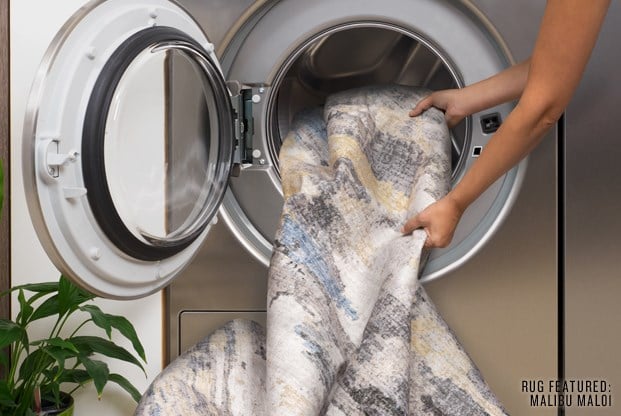
Mesh covers also help keep rug tassels or fringes intact.
Drying Rugs After Washing
Air Drying Techniques
Air drying is the safest method for rugs. Lay the rug flat on a clean surface to dry evenly. Hanging rugs can cause stretching or misshaping. We flip rugs occasionally to help both sides dry well.
Drying indoors or in shade protects colors and fabric from sun damage.
Avoiding Machine Dryers and Sun Damage
Do not place rugs in a machine dryer. Heat can shrink or damage rug fibers. Also, direct sun can fade colors and weaken fabric texture.
We always set aside time for slow, natural drying to keep rugs looking their best.
Maintenance and Care Tips
Frequency of Machine Washing Rugs
How often you wash rugs depends on use and dirt levels. For bedroom rugs, washing every 6 to 12 months is enough. Living room rugs may need more frequent cleaning due to heavy foot traffic.
Regular vacuuming and spot cleaning can extend the time between machine washes.
Storage and Regular Cleaning Practices
Store rugs rolled up in a dry, cool place to avoid moisture and mold. Avoid folding rugs to prevent creases. We recommend covering rugs with breathable cloth when not in use.
Regular vacuuming, shaking out dirt, and prompt stain removal keep rugs fresh and reduce full wash needs.
Alternative Rug Cleaning Methods
Professional Rug Cleaning Services
Professional cleaning is best for delicate, large, or handmade rugs. Experts use special tools and solutions to clean thoroughly without damage. We trust professional cleaners for valuable or antique rugs.
Though costlier, professional cleaning preserves rug quality longer.
Hand Washing Rugs
Hand washing is a gentle option for small, delicate rugs. Use mild detergent and cold water with soft scrubbing. Rinse well and air dry flat. We prefer hand washing for wool or silk rugs that can’t handle machines.
It takes more effort but protects fragile fibers better.
Spot Cleaning for Delicate Materials
For minor stains, spot cleaning is safest. Use a damp cloth and mild cleaner to blot stains gently. Avoid soaking the rug or rubbing too hard to prevent damage.
This method keeps delicate rugs clean without full washing.
For more tips on safe rug care, see a practical guide on can you put a rug in the washer.
| Rug Fiber | Machine Wash Safe | Recommended Water Temp | Wash Cycle |
|---|---|---|---|
| Cotton | Yes | Cold | Delicate |
| Polyester | Yes | Cold | Delicate |
| Wool | No | Hand Wash Only | Gentle Hand Wash |
| Silk | No | Hand Wash Only | Gentle Hand Wash |
| Nylon | Yes | Cold | Delicate |
Understanding your rug’s fiber helps choose the right cleaning method. Machine washing is great for durable synthetics and cotton, but avoid it for wool or silk.
Always check care labels and test small areas first.
| Step | Action | Tip |
|---|---|---|
| 1 | Vacuum Rug | Remove loose dirt and hair |
| 2 | Pre-treat Stains | Use mild stain remover |
| 3 | Choose Wash Cycle | Delicate or wool cycle |
| 4 | Load Rug | Use mesh laundry bag |
| 5 | Use Cold Water | Prevents shrinkage |
| 6 | Air Dry Flat | Avoid sun and machine dryer |
This step-by-step guide helps simplify machine washing your rugs safely. Following these tips reduces damage and keeps rugs fresh.
Patience during drying ensures your rug stays soft and durable.
| Pros of Machine Washing | Cons of Machine Washing |
|---|---|
| Fast and efficient cleaning | May damage delicate fibers |
| Cost-effective | Limited by machine size |
| Good for synthetic rugs | Risk of color fading |
| Controls detergent use | Not suitable for handmade rugs |
Machine washing rugs has clear benefits but also some risks. Weighing these helps decide the best cleaning method for your rug type.
For heavy or delicate rugs, professional cleaning or hand washing may be a better choice.
Keeping rugs clean and cared for extends their life and beauty. Machine washing is a useful tool if done carefully and correctly.
Frequently Asked Questions
Can all rugs be washed in a washing machine?
No, only rugs labeled as machine washable or made from certain synthetic fibers are safe to wash in a machine.
What washing machine settings are best for cleaning rugs?
Use a gentle or delicate cycle with cold water and slow spin speed to avoid damaging the rug fibers.
How often should rugs be machine washed?
We recommend washing rugs every 6 to 12 months depending on foot traffic and stain level.
Is professional rug cleaning better than machine washing?
Professional cleaning is ideal for delicate or handmade rugs, but machine washing works well for durable, machine-safe rugs.
How should I dry rugs after washing?
Air dry rugs flat in shade to avoid sun damage and fabric shrinkage; do not use a machine dryer.

Michael Peterson is a home appliance writer focused on practical washing machine care, maintenance, and troubleshooting. He shares simple, reliable tips to help readers keep their washing machines running efficiently, avoid common problems, and extend appliance life.