Introduction to Washing Machine Drain Pipes 🚀
Choosing the right washing machine drain pipe size is key for safe and smooth water flow. In 2026, builders and plumbers follow strict rules to avoid clogs and backups. The pipe must be big enough to handle the washing machine’s discharge flow rate without trouble. This article explains the standard sizes, standpipe height, and other plumbing tips you need.
Understanding household washing machine plumbing basics helps prevent damage and keeps your laundry room clean and dry.
We also look at plumbing codes and venting needs to make sure your drain line works well.
Choosing the Right Pipe Diameter for Washer Drain
The standard washing machine hose diameter for drainage usually connects to pipes measuring 1.5 or 2 inches. Industry consensus points to a 2-inch pipe as best for modern washers. This size handles the water discharge quickly, reducing the chance of backups.
Smaller pipes, like 1.5 inches, may work but can clog more easily. They also may not meet the latest plumbing codes for washer drains. Using a 2-inch pipe improves flow velocity and drainage capacity. This size supports pressure loss in pipes better, too.
For a deeper understanding of this mechanic, analyzing resources on washing machine drains and pipe size provides excellent foundational context.
Materials used for drain pipes are usually PVC or ABS. Both are durable and meet household water drainage needs. The fittings must match pipe diameter to avoid leaks.
Washing Machine Standpipe Height and Installation 📌
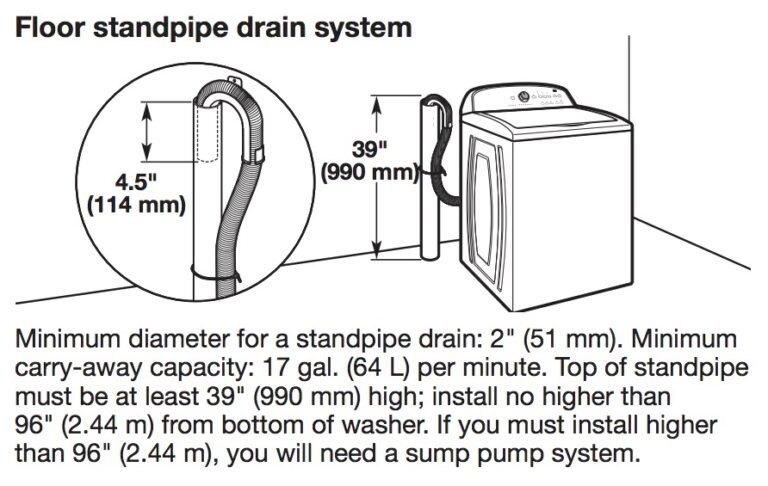
The washing machine standpipe height is a crucial factor in drain pipe setup. The typical height ranges from 18 to 30 inches above the trap. This height helps prevent water from backing up into the machine.
Standpipe installation requires proper slope gradient—usually 1/4 inch per foot—to ensure water flows towards the drain. The trap must be vented to avoid suction that can stop water flow.
Incorrect standpipe height or missing venting can cause the washer drain backup. Pipe fittings should be tight and secure to prevent leaks.
Drain hoses also vary in length and size. A washing machine discharge hose should be flexible but sturdy. Proper hose connection to the standpipe or sink is essential.
Sink vs Standpipe for Washer Drain 🆚
Some homes use a laundry sink for the washing machine drain. Others use a standpipe. Both options can work but have pros and cons.
A standpipe is a dedicated pipe that drains water quickly. It meets plumbing standards better and reduces the risk of water spills. A sink drain is easier to access but can clog if the sink trap is not maintained.
Using a standpipe requires proper venting and trap installation. A sink must have a trap that meets plumbing codes. Either way, the pipe diameter and hose size must be adequate.
For those curious about installation, how to clean clogged washing machine drain pipe is a useful skill to learn for household maintenance.
1.5 Inch vs 2 Inch Drain Pipe: Which is Best? ⚖️
Choosing between 1.5 inch and 2 inch drain pipe depends on washing machine specs and plumbing rules. A 1.5 inch pipe is smaller and can work for low-flow machines or older homes.
However, most modern washers discharge water fast and in large amounts. A 2 inch pipe handles this better, reducing risk of clogging. Plumbing codes increasingly require 2 inch pipes for washer drains.
The table below compares key factors:
| Feature | 1.5 Inch Pipe | 2 Inch Pipe |
|---|---|---|
| Drainage Capacity | Lower | Higher |
| Clog Risk | Higher | Lower |
| Code Compliance | Less Common | Standard |
| Installation Cost | Lower | Higher |
Installing a 2 inch pipe is the best long-term choice. It supports higher flow velocity and reduces pressure loss in pipes.
Proper pipe fittings and venting make the setup reliable and safe.

Tips for Drain Pipe Installation for Washers 📌
Correct drain pipe installation for washers means following these steps:
- Use a 2 inch PVC or ABS pipe for the drain line.
- Install a P-trap to block sewer gases.
- Ensure the standpipe height is 18 to 30 inches.
- Keep the pipe slope at 1/4 inch per foot downward.
- Connect the washing machine discharge hose tightly.
- Vent the drain pipe to prevent suction and backflow.
Also, use proper pipe fittings for washer drainage. Avoid sharp bends that reduce flow. Secure pipes firmly to avoid leaks.
Following local plumbing codes and standards ensures inspection passes and safe water drainage system function.
Preventing Washer Drain Backup and Issues 🚀
Backflow prevention is vital. A blocked or undersized pipe can cause water to back up into the washer or laundry area. This leads to damage and mold risk.
Regular cleaning of the washing machine waste water pipe and drain hose avoids buildup. Using a trap and vent helps reduce pressure loss in pipes and maintains flow velocity.
If you want to know more about cleaning, check clean washing machine drain hose methods for easy maintenance.
Typical Washing Machine Plumbing Setup
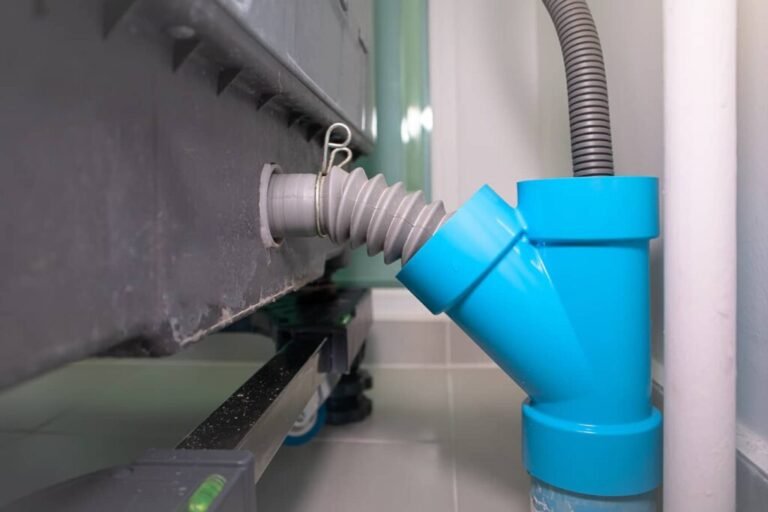
In a typical setup, the washing machine connects to a water outlet pipe for supply and a drain hose for wastewater. The drain hose leads into a standpipe with a trap and vent.
The standpipe connects to the home’s main drain. Pipe diameter is usually 2 inches. This setup meets modern plumbing codes and handles discharge flow safely.
Proper hose length and size prevent kinks. Pipe fittings for washer drainage ensure no leaks and good flow. The vent pipe keeps air flowing to avoid suction issues.
Understanding this setup helps with troubleshooting or upgrades.
| Component | Size/Spec | Purpose |
|---|---|---|
| Drain Hose | 1.5 – 2 inch diameter | Carry waste water from washer |
| Standpipe | 18-30 inches high, 2 inch diameter | Drain water safely and prevent backups |
| Trap | Standard P-trap | Block sewer gases |
| Vent | Properly sized vent pipe | Maintain air flow, avoid suction |
Proper installation avoids issues and keeps laundry safe.
Conclusion: Best Practices for Washing Machine Drain Pipes ✅
The best pipe size for washer drain is 2 inches. This size meets plumbing codes and handles modern discharge flow rates well.
Standpipe height should be 18 to 30 inches with proper venting and trap installation. Use durable pipe materials like PVC or ABS with correct fittings.
Regular maintenance and cleaning prevent backups. Choose a sturdy, correct-sized washing machine discharge hose for safe water disposal.
Following these guidelines ensures a smooth, safe household washing machine plumbing system. For more detailed guidance on plumbing standards and sizing, check resources on washing machine drain pipe best solutions.
Understanding these basics helps avoid costly repairs and keeps your laundry flowing well in 2026 and beyond.
Frequently Asked Questions
What is the standard washing machine hose diameter?
The standard washing machine hose diameter is usually 3/4 inch for water supply and 1.5 to 2 inches for the drain hose.
What is the best pipe size for a washer drain?
Most plumbing codes recommend a 2-inch drain pipe for washing machine drainage to handle the discharge flow rate safely.
How high should the washing machine standpipe be?
The typical washing machine standpipe height is between 18 and 30 inches to prevent backflow and allow proper drainage.
Do washing machine drains need a trap and vent?
Yes, a trap is required to prevent sewer gases, and proper venting is necessary to maintain drainage and prevent backups.
Can a 1.5-inch drain pipe work for washing machines?
While some older setups use 1.5-inch pipes, a 2-inch pipe is preferred today to reduce clog risk and meet modern plumbing codes.

Keith Boyd Is A Seasoned Appliance Care Expert With Over A Decade Of Experience In Home Appliance Maintenance. His Authoritative Insights On Washing Machine Care And Upkeep Are Trusted By Homeowners Nationwide. With A Passion For Educating Others, Keith Shares Valuable Tips That Ensure Your Appliances Run Smoothly For Years To Come.