How Long Does It Take To Become HVAC Certified In California? The Real Deal.
So, you’re thinking about diving into the world of HVAC in California? Good move. It’s a field with serious demand, stable work, and you get to be the hero who fixes that broken AC when it’s 100 degrees out. But the big question keeps nagging: how long does HVAC certification actually take out here?
Forget those slick brochures promising the moon. The truth is, it’s not a one-size-fits-all answer. It depends on your path, your dedication, and frankly, how quickly you absorb new skills. Let’s cut through the fluff and get down to brass tacks.
The Lay of the Land: California’s HVAC Scene

Source : fieldedge.com
Why California Needs More HVAC Pros
California’s climate is a beast. From scorching deserts inland to the often-humid coast, keeping buildings comfortable year-round is a non-negotiable. This means a constant, booming need for skilled HVAC technicians. Think about it: every home, every office building, every server farm needs its climate controlled. That’s a massive industry, and it’s only getting bigger with new construction and aging equipment needing replacement.
It’s not just about heating and cooling, either. Modern systems are complex, integrating ventilation, air quality, and smart controls. This complexity demands trained professionals, not just handy folks. The state’s commitment to energy efficiency also drives demand for technicians skilled in newer, more advanced systems.
Understanding HVAC Certification vs. Licensing
Okay, let’s clear up a common point of confusion. People toss around “HVAC certification” and “HVAC license” like they’re the same thing. They’re not. Certification is generally about proving your skills and knowledge in specific areas, often through exams offered by third-party organizations like NATE or the EPA. Getting HVAC certified shows you know your stuff.
Licensing, on the other hand, is a state-issued permit required to legally operate as an HVAC contractor in California. This usually involves proving experience (often years!) and passing rigorous business and technical exams. While certification is a huge step towards becoming a licensed contractor, they are distinct milestones. Most technicians start with certifications.
What Does “Certified” Even Mean Here?
In the context of becoming an HVAC technician, “certified” usually refers to obtaining credentials that validate your competency. The most fundamental one is the EPA Section 608 certification, which is legally required to handle refrigerants. Beyond that, there are certifications for specific manufacturers or types of equipment, and broader industry certifications like NATE (North American Technician Excellence). Pursuing HVAC certification is key.

Source : hvaccareernow.com
These aren’t just pieces of paper. They’re proof you’ve met industry standards. Employers look for them. Customers feel more confident knowing their HVAC service provider is certified. It signifies a commitment to professionalism and safety in a critical trade.
The Fast Track: Trade Schools & Certificate Programs
The Traditional Path: Short-Term Vocational Training
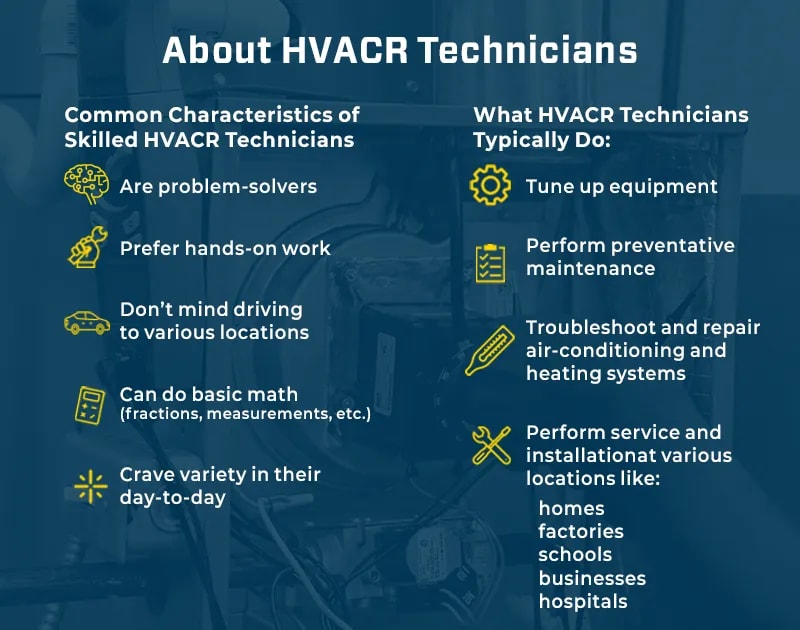
For many aspiring technicians, the quickest route to gaining foundational knowledge is through a dedicated HVAC vocational program. These schools are designed to be intensive, focusing squarely on the skills you need to land an entry-level job. Many programs are geared towards getting you job-ready in under a year. It’s a focused approach, cutting out general education requirements found in longer programs.
You’ll find these programs at community colleges and private trade schools across California. They often offer hands-on training in labs that mimic real-world scenarios. Think of the guy running a pizza shop on 4th Street needing his ovens fixed – that’s the kind of immediate need HVAC techs fill.
Program Lengths: What to Expect
When we talk about how long it takes, certificate programs are typically the shortest. You can often complete one in anywhere from 6 months to 15 months. This timeframe depends heavily on the program’s structure and the number of hours dedicated to coursework and practical training. Some schools, like Summit College, offer accelerated programs designed to get you out the door and earning faster. They understand the urgency many students feel to start their HVAC career path.
These shorter programs pack a punch. They prioritize Needed skills: electrical theory, refrigeration principles, system installation, troubleshooting, and safety protocols. It’s a deep dive, but a concentrated one. The goal is competency, not necessarily a broad academic education.
Hands-On Learning: The Secret Sauce
What makes trade school effective? It’s the sheer amount of practical, hands-on HVAC training. You’re not just reading about how a compressor works; you’re physically connecting wires, brazing lines, and testing circuits. This practical experience is Crucial. It builds muscle memory and problem-solving skills that textbooks alone can’t provide.
Instructors are typically seasoned professionals who bring real-world experience into the classroom. They’ve been in the trenches. They know the common pitfalls and the best shortcuts (the legitimate ones, anyway!). This mentorship is a huge advantage over self-study. You get direct feedback and learn from their hard-won wisdom.
The Mid-Range Option: Diploma and Associate Degrees
What’s the Difference with a Diploma?
Diploma programs often overlap significantly with certificate programs but might include a slightly broader scope of study or a longer duration. Think of them as a slightly more Full version of a certificate. They still focus heavily on vocational skills but might incorporate a few more general technical subjects or extended lab time. This can mean a program length of perhaps 9 to 18 months.
A diploma signals a slightly deeper level of commitment and training. Some employers might view a diploma as a stronger qualification than a basic certificate, though in the HVAC world, practical skills and certifications often trump the specific name of the credential. The important part is the quality of the training received.
Associate Degrees: A Broader Foundation
An Associate of Occupational Studies (AOS) or an Associate of Applied Science (AAS) in HVAC technology takes things a step further. These programs typically take around two years to complete. They include the core HVAC training found in certificate programs but also incorporate more general education courses (like math, communications, and science) and potentially more in-depth theoretical studies.
Why go for an Associate’s? It can open doors to more supervisory roles or positions in technical support and design down the line. It provides a more well-rounded education. If you’re considering eventually moving into management or design, this path might offer a better long-term foundation. It’s a solid choice for gaining HVAC technical skills.
Comparing Program Goals
The key difference lies in the objective. Certificate and diploma programs are laser-focused on preparing you for immediate employment as a technician. Associate degrees offer that, plus a pathway for further education or advancement into related technical fields. The time investment naturally reflects this difference. Choosing between them depends on your career aspirations and how quickly you want to enter the workforce.
Consider your personal goals. Do you want to start earning as soon as possible? Or are you looking for a more Full education that might take longer but offer broader future options? There’s no single right answer, only the right answer for your HVAC journey.
Source : uti.edu
The Long Haul: Apprenticeships and On-the-Job Training
Apprenticeships: Earn While You Learn
Apprenticeships are a classic, time-tested route into skilled trades. They combine structured on-the-job training with classroom instruction. You work under experienced professionals, learning the ropes firsthand, while also attending classes to learn the theory and code requirements. This is a fantastic way to gain practical experience and start earning a decent wage relatively quickly.
The duration of an apprenticeship can vary significantly, but they typically last anywhere from three to five years. During this time, you’re not just watching; you’re doing. You’ll progress from basic tasks to more complex installations and troubleshooting under supervision. It’s a demanding but highly rewarding path to becoming a fully qualified HVAC professional.
On-the-Job Training (OJT): The School of Hard Knocks
Some individuals enter the HVAC field through OJT without a formal apprenticeship structure. This might involve starting as a helper or assistant to an experienced technician and gradually taking on more responsibility as skills develop. This path can be less structured and the length of time to become proficient is highly variable.
While OJT can lead to competence, it often lacks the standardized curriculum and oversight of a formal apprenticeship or trade school program. It might take longer to gain a Full understanding of all aspects of the trade. Some employers prefer candidates with formal training or apprenticeship backgrounds because it ensures a baseline level of knowledge and skill development.
Pros and Cons of Apprenticeship/OJT
The biggest pro? You’re earning money while you learn, and by the end, you often have significant practical experience and potentially a journeyman status. The con? It can take longer to reach that fully independent, certified technician level compared to an intensive trade school program. Plus, the quality of training can depend heavily on the specific company and mentor you’re working with.
Formal apprenticeships, often union-backed or through industry associations, usually provide a more standardized and Full learning experience. Non-union OJT can be more hit-or-miss. It’s Key to understand what you’ll be learning and how your progress will be evaluated on this path.
Needed Certifications: Beyond the Training Program
The Mandatory EPA Section 608 Certification
This is non-negotiable. Under the Clean Air Act, anyone who opens an air conditioning or refrigeration system’s circuit and exposes refrigerant must be certified. This EPA Section 608 certification ensures technicians understand the proper handling, recovery, and disposal of refrigerants to protect the environment. You can’t legally work on systems containing regulated refrigerants without it.
There are different types of Section 608 certification (Type I, II, III, and Universal) based on the types of equipment you’ll be working on. Most training programs cover the material needed to pass the exam, and it’s usually one of the first certifications you’ll obtain. It’s a foundational requirement for nearly all HVAC jobs.
NATE Certification: The Gold Standard
NATE (North American Technician Excellence) is the leading independent certification organization for HVAC technicians. Earning NATE certification is highly respected in the industry. It demonstrates a high level of knowledge and competence in specific areas, like heating, ventilation, air conditioning, and light commercial refrigeration. It’s a voluntary certification, but many employers actively seek out NATE-certified technicians.
There are installation and service certifications, with various specialty areas. Passing a NATE exam requires a solid understanding of HVAC principles and often some practical field experience. It’s a significant achievement that can boost your career prospects and earning potential. It shows a commitment to ongoing learning and technical excellence.
Manufacturer-Specific Training
Many major HVAC equipment manufacturers (like Carrier, Trane, Lennox, etc.) offer their own training programs and certifications. These often focus on the installation, maintenance, and repair of their specific product lines. Completing these can make you a more valuable technician to companies that specialize in certain brands.
While not always mandatory, manufacturer training is a great way to deepen your expertise on specific systems. It shows initiative and a willingness to become a specialist. This type of focused knowledge can be a significant advantage in a competitive job market. It’s about becoming an expert in HVAC equipment.
Source : summitcollege.edu
Factors Affecting Your Timeline
Program Choice Matters Most
As we’ve discussed, the biggest factor is the type of training you choose. A 6-month certificate program will obviously get you “certified” (in the sense of completing training) much faster than a 3-year apprenticeship. There’s no shortcutting the learning process itself, but you can choose a path that aligns with your timeline goals. This choice dictates the initial time to HVAC certification.
Consider your learning style too. Some people thrive in an intensive, fast-paced classroom environment, while others learn best by doing on the job. Be honest with yourself about what will work best for your personal development and career entry.
Full-Time vs. Part-Time Study
Are you able to dedicate yourself to HVAC training full-time, or do you need to juggle it with work or family commitments? Full-time study at a trade school or community college will naturally accelerate your progress. Part-time programs often extend the completion time significantly, sometimes doubling it. Weigh your available time against your urgency to enter the HVAC field.
Part-time options can be great for flexibility, but they require significant self-discipline to stay on track. You need to be motivated to keep up with coursework and lab work outside of your other responsibilities. It’s a marathon, not a sprint, if you choose this route.
Your Own Pace and Dedication
Let’s be real: some people just learn faster than others. Your personal dedication, aptitude for mechanical and electrical concepts, and how much effort you put into studying and practicing outside of class will all influence how quickly you master the material. The best programs provide the framework, but you have to put in the work.
Don’t be afraid to ask questions. Seek out extra help. Practice your skills whenever possible. The faster you grasp the core concepts, the quicker you’ll be ready to take on the challenges of real-world HVAC work. This is where personal drive really pays off.
Sample Timelines to HVAC Certification in California
Scenario 1: The Accelerated Trade School Graduate
This is for the individual who wants to get into the field ASAP. They enroll in an intensive, full-time HVAC certificate program. They focus, study hard, and complete the program in approximately 9 months. Right after graduation, they study for and pass their EPA Section 608 exam. This individual is now considered “certified” in terms of basic training and refrigerant handling, ready for entry-level positions.
For example, Summit College offers programs that can get students trained and ready for the workforce in a similar timeframe. Their focus is on job readiness, meaning the curriculum is packed with the practical skills employers are looking for right now. This path prioritizes speed to employment.
Scenario 2: The Associate Degree Holder
This individual opts for a more Full education. They enroll in a two-year Associate’s degree program at a community college or technical institute. This includes core HVAC training plus general education courses. Upon completion, they hold an Associate’s degree and have likely already obtained their EPA certification during their studies. This path takes roughly 2 years.
This longer timeframe provides a broader educational foundation. It might open up more advanced roles or further educational opportunities later on. It’s a trade-off between immediate entry and a more Strong academic background. Programs like those found at community colleges offer this balance.
Scenario 3: The Apprentice
Someone chooses the apprenticeship route. They get accepted into a formal program, which includes working full-time as a trainee and attending classes part-time. They gain Crucial on-the-job experience while building their technical knowledge. After 3-5 years of dedicated apprenticeship, they typically achieve journeyman status and are fully qualified, often holding multiple certifications by this point.
This path is characterized by steady progress and significant practical experience. You’re building a career incrementally. Housecall Pro highlights that apprenticeships represent a longer, more immersive training period, often involving thousands of hours of practical work. It’s a reliable, albeit slower, route.
| Training Path | Typical Duration (Months) | Key Outcome | Pros | Cons |
|---|---|---|---|---|
| HVAC Certificate Program | 6 – 15 Months | Basic Competency, EPA Certifiable | Fastest entry into the job market, focused skills, often lower cost. | Less theoretical depth, may require further specialization. |
| HVAC Diploma Program | 9 – 18 Months | Broader Vocational Skills | More Full than a certificate, good practical focus. | Longer than a certificate, still primarily vocational. |
| Associate’s Degree (AAS/AOS) | 24 Months | Technical Skills + General Education | Well-rounded education, potential for advancement/further study. | Longest classroom-based time, higher cost. |
| Apprenticeship | 36 – 60 Months | Journeyman Level Skills, Significant Experience | Earn while you learn, extensive hands-on experience, often union-backed. | Longest overall duration, training quality can vary. |
| On-the-Job Training (OJT) | Variable (Highly) | Practical Skills, Experience-Based | Direct work experience, potential for rapid learning with a good mentor. | Least structured, may lack Full knowledge, inconsistent training. |
Making Your Choice: What Path is Right for You?
Source : housecallpro.com
Aligning Training with Career Goals
The “best” path isn’t universal; it’s personal. Ask yourself: what kind of HVAC career do I envision? Do I want to be installing systems for the next 30 years? Or do I see myself eventually running my own contracting business, managing a team, or specializing in commercial refrigeration? Your answer heavily influences the ideal training duration and type.
If the goal is simply to get a job installing and servicing residential systems quickly, a 9-month certificate program might be perfect. If you dream of owning your own company someday, the broader foundation of an Associate’s degree or the extensive field experience from an apprenticeship might serve you better long-term. Brownson’s Guide emphasizes understanding these different routes to Match with personal ambition.
Considering Cost and Financial Aid
Let’s not forget the money. Trade schools and community colleges have tuition fees. Apprenticeships are often sponsored by unions or contractor associations, potentially reducing your out-of-pocket costs. On-the-job training might mean starting at a lower wage initially. You need to factor in tuition, tools, potential certification exam fees, and living expenses during your training period.
Many reputable HVAC programs offer financial aid, grants, or payment plans. Don’t let cost be an immediate deterrent. Research the options available at the schools or programs that interest you. Explore scholarships specifically for vocational training in skilled trades. Getting assistance can make a significant difference.
The Importance of Accreditation and Reputation
When choosing a school or program, look for accreditation. This means the institution meets certain standards of quality. Also, research the school’s reputation. What do former students say? Does the school have strong connections with local employers for job placement? A good reputation is often a strong indicator of quality training and better career prospects. A program’s standing can impact your perception as a certified technician.
Checking online reviews, talking to current students or alumni, and inquiring about job placement rates are all smart steps. A program that consistently gets positive feedback and has a track record of successful graduates is usually a safe bet. Don’t just rely on marketing materials; do your homework!
Conclusion: Your HVAC Future in California Starts Now
So, how long does it take to become HVAC certified in California? It’s a spectrum, really. You can be EPA certified and ready for entry-level work in about 9 months via an accelerated trade program. Or you might dedicate 2 years to an Associate’s degree for a broader base, or even 3-5 years embracing the deep, practical learning of an apprenticeship.
The key isn’t just the time spent, but the quality of the training and the certifications you earn along the way. Choose the path that best fits your ambition, your learning style, and your financial situation. California’s HVAC industry is booming, and a well-trained, certified technician is always in demand. The time invested is an investment in a stable, rewarding skilled trade career.
Frequently Asked Questions
What is the $5000 rule for HVAC?
Because, honestly, there isn’t a universal ‘$5000 rule’ for HVAC that’s widely recognized. Sometimes, people might be referring to specific company incentives or maybe a local rebate program. But for actual HVAC certification costs, it varies a lot depending on the program you choose. Think community college, trade school, or even apprenticeships. You could be looking at anywhere from a few hundred to a few thousand dollars, but that $5000 figure isn’t a standard thing.
Can you make 200k in HVAC sales?
Totally! It’s not the norm, but yeah, it’s possible to hit that $200k in HVAC sales mark. It really depends on how good you are, the company you work for, and the commission structure. High-volume markets, a knack for closing deals, and excellent product knowledge can definitely get you there. It takes hustle and a good understanding of what customers need, but the earning potential is there.
Is 28 too old to get into HVAC?
Absolutely not! Seriously, 28 is a great age to start in HVAC. You’ve likely got some work experience under your belt, maturity, and a better idea of what you want. Plus, many people switch careers into trades later in life. You’ll pick up the skills, and with your life experience, you might even coect better with customers. Age is just a number in this field; skill and dedication are what matter.
How much do HVAC techs make in CA?
In California, HVAC tech salaries can be pretty solid, but it’s a big state, so it varies. Generally, you’re looking at an average somewhere in the $50,000 to $70,000 range aually, but experienced techs or those with specialized skills, especially in high cost-of-living areas like LA or the Bay Area, can pull in way more. Think $80,000 or even $100,000+ if you’re in demand and good at what you do.
How much experience do I need to become an HVAC supervisor?
To move up to a supervisor role in HVAC, you’ll typically need several years of hands-on experience, usually around 3-5 years or more. It’s not just about knowing how to fix an air conditioner; you need to understand project management, team leadership, customer service, and often have a solid grasp of local building codes and regulations. Companies want someone who’s seen a lot and can handle the pressure of managing jobs and people. So, gain experience, show you can lead, and the opportunities will come.
