The Real Deal on How Long it Takes to Get EPA Certified for HVAC
So, you’re looking at getting EPA certified for HVAC, huh? Let’s cut through the noise. Forget those slick marketing pitches that promise you the moon overnight. This is about real work, real skills, and frankly, a real timeline. It’s not some magic trick; it’s a career path that demands a bit of your time upfront.
If you’re picturing yourself fixing air conditioners and heating systems without the proper credentials, think again. The Environmental Protection Agency, or EPA, has some pretty strict rules about handling refrigerants. Messing around with those without the right certification? That’s a big no-no, and trust me, the fines can sting.
Why the EPA Certification is Non-Negotiable
This isn’t just a piece of paper to hang on your wall. The EPA 608 certification is legally required if you’re going to be touching any equipment that contains regulated refrigerants. Think about your standard air conditioners, refrigerators, even commercial chillers. They all run on these gasses, and releasing them into the atmosphere? That’s bad news for the ozone layer and, well, us.
Your employer will demand it. Period. No shop owner worth their salt wants to risk hefty fines or, worse, damage sensitive equipment because someone didn’t know what they were doing. It’s a baseline requirement, the entry ticket into this field.
It also signals you’re serious. Holding that certification tells clients and colleagues you’ve put in the effort to understand the environmental impact and safe handling procedures. It builds trust, plain and simple.
Debunking the “Instant Certification” Myth
I’ve seen articles that make it sound like you can just click a button and poof, you’re certified. That’s pure fiction. Getting your EPA 608 certification involves studying, understanding complex concepts, and passing an exam. There’s no cutting corners on safety and environmental regulations.
The idea that you can just cram for an hour and pass is dangerous. Refrigerant handling is serious business. You need to grasp the science behind it, the environmental consequences, and the proper recovery, recycling, and disposal methods. It’s not just memorizing facts; it’s understanding principles.
So, when you see those claims of “get certified in a day,” be skeptical. Very skeptical. Real knowledge takes time to absorb and solidify.
Breaking Down the EPA 608 Certification Process
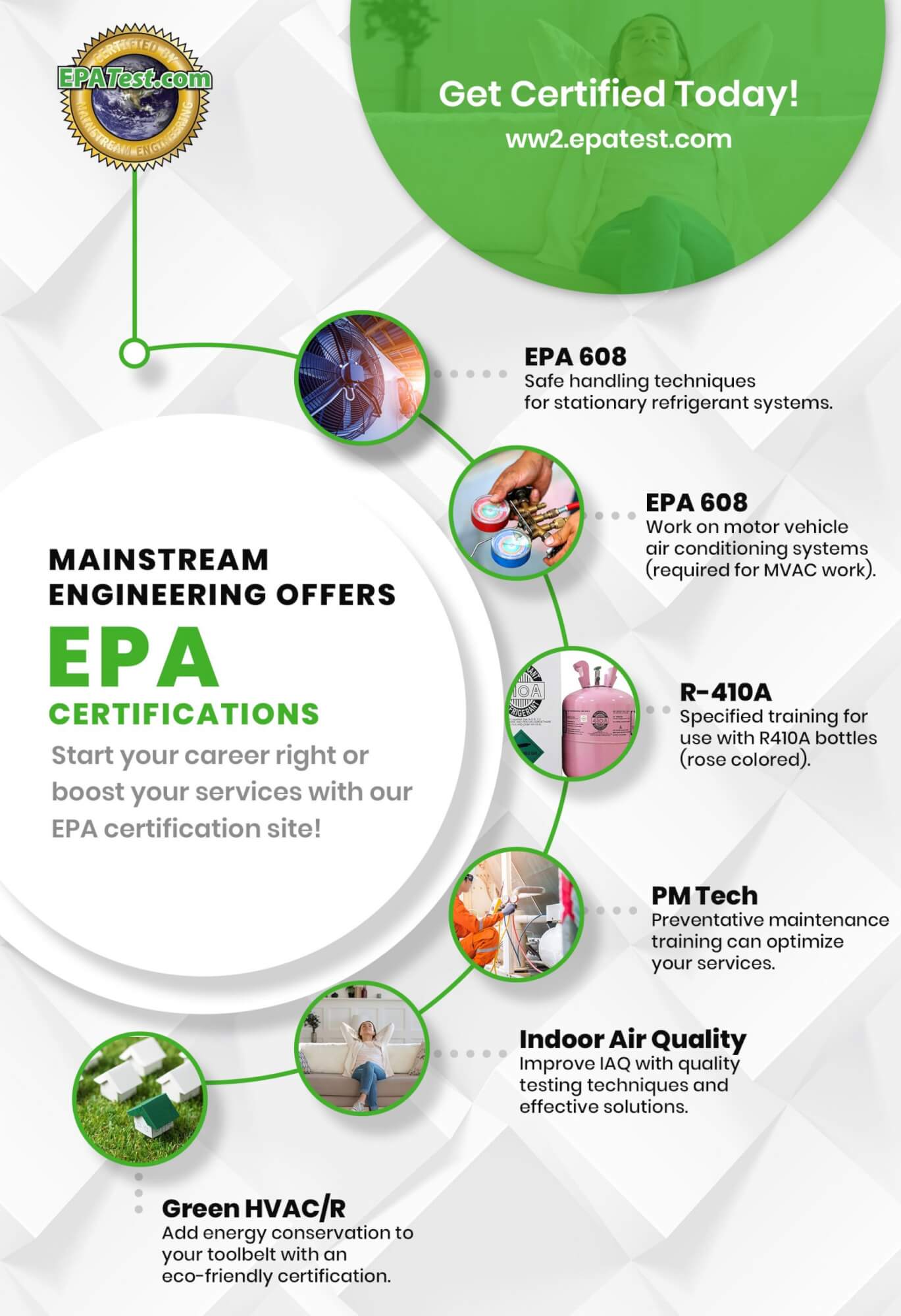
Source : ww2.epatest.com
Alright, let’s get down to the nitty-gritty of what’s actually involved. The EPA 608 certification isn’t one-size-fits-all. It’s divided into different types, depending on the kind of work you’ll be doing. Understanding these types is the first step in figuring out what you need and, consequently, how long it will take.
The core of it is the exam. You’ve got to pass that, no exceptions. And before you even think about sitting for it, you’ll need to dedicate time to studying the material. This is where the bulk of your effort will go.
The Four Types of EPA 608 Certification
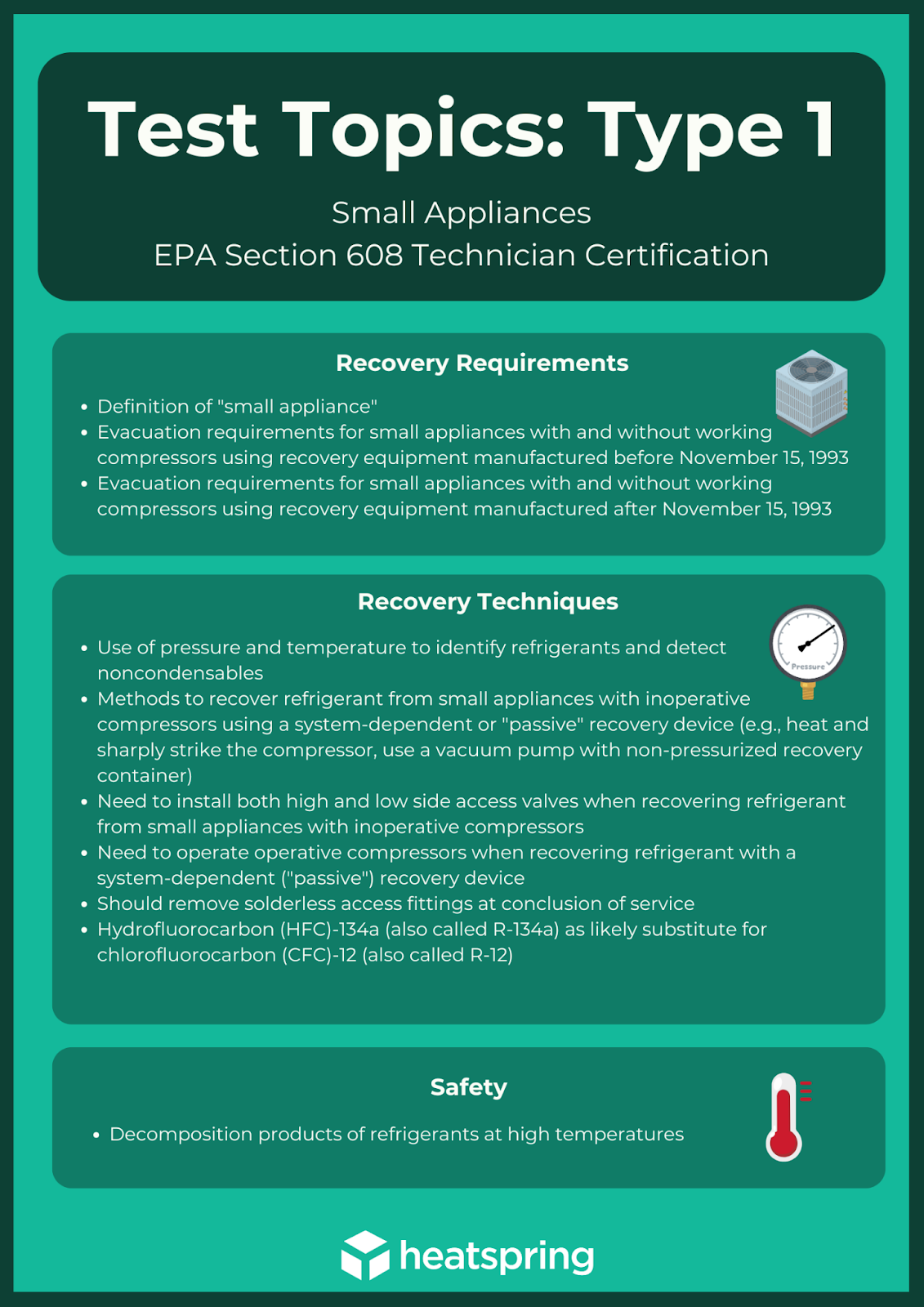
First off, you’ve got Type I. This is for small appliances – think window AC units, dehumidifiers, things like that, containing 5 pounds or less of refrigerant. It’s the most basic level.
Then there’s Type II. This one covers high-pressure appliances, like your standard residential and small commercial air conditioning and refrigeration units. This is probably what most people mean when they talk about HVAC certification.
Source : blog.heatspring.com
Next up is Type III. This deals with low-pressure appliances, like larger commercial chillers. It requires a different understanding of how those systems operate and the refrigerants they use.
Finally, the Universal certification. This is the big one. It covers everything in Type I, II, and III. If you want to be a well-rounded HVAC technician and work on a wide variety of equipment, you’ll need this. It requires passing all three sections of the exam (or passing Type II and Type III sections, assuming you’ve already passed Type I).
Studying for the EPA 608 Exam: What to Expect
This is where the actual time commitment kicks in. You can’t just wing it. The study material covers a lot: refrigerant types, safety precautions, environmental impact, proper handling procedures, equipment repair, and leak detection. It’s Full.
How much time you need really depends on your learning style and your existing knowledge. Some folks might pick it up quicker than others. But realistically, you’re looking at dedicating a solid chunk of time each week for several weeks. Maybe 10-20 hours of study per week for a few weeks?
There are plenty of resources available. Many HVAC training programs include EPA 608 prep as part of their curriculum. You can also find online courses, study guides, and practice exams. Finding what works best for you is key to efficient studying.
Taking and Passing the Exam
Once you’ve put in the study hours, it’s time for the exam. These are typically administered by an EPA-approved testing organization. You’ll need to find an authorized testing facility near you. The test itself usually consists of multiple-choice questions.
The passing score is generally around 70%. It’s not rocket science, but you do need to have a firm grasp of the material. Missing a few too many questions on safe handling or environmental laws, and you’ll be doing it again.
After you pass, you’ll receive your certification card, usually within a few weeks. This card is your proof. Keep it safe! It’s also important to note that EPA 608 certifications don’t expire, which is a huge plus. You get it once, and you’re good to go indefinitely.
The Timeline: How Long Does it Actually Take?
So, we’ve covered what’s involved. Now, let’s put some numbers on it. The “how long” question really hinges on how you approach your training and studying. Are you going through a formal program, or are you self-studying?
It’s not a single, fixed number. It’s a range, and your choices significantly impact where you land in that range. Don’t expect to be done by next Tuesday unless you’ve already got a strong background.
Scenario 1: Full HVAC Training Programs
If you enroll in a full-fledged HVAC technician program at a trade school or community college, the EPA certification is usually baked into the curriculum. These programs are designed to cover all the necessary skills and knowledge. Typically, these programs run anywhere from six months to two years, depending on whether you’re pursuing a certificate or an associate’s degree.
Within those programs, the EPA 608 training is integrated. You’ll likely spend a few weeks or a couple of months specifically dedicated to refrigerant handling and prep. The exam is often administered towards the end of that module or the program itself.
So, in this case, getting your EPA certification is part of a larger educational journey. The timeline is dictated by the program’s schedule, not just the certification itself. You’re gaining a much broader skillset alongside your EPA credential.
Scenario 2: Self-Study and Certification Exams
This is where you have more control over the timeline. If you already have some basic mechanical aptitude or are just looking to get the EPA 608 specifically, you can pursue self-study. You’ll need to find an EPA-approved testing facility and get your hands on study materials.
How long does this take? It’s highly variable. Someone dedicating 15-20 hours a week to focused study could potentially be ready to test in as little as 2-4 weeks. Others might prefer a more relaxed pace, spreading their studying over 2-3 months. It really comes down to your personal schedule and how quickly you absorb the information.
The key here is discipline. You have to motivate yourself, stick to a schedule, and Make sure you’re covering all the necessary topics thoroughly. This approach can be faster, but it requires a lot of self-direction.
The Role of Practice Exams
Regardless of your study method, practice exams are your best friend. They help you gauge your readiness and identify weak areas. Many online resources offer these, and they mimic the actual test format.
If you’re consistently scoring, say, 85-90% on practice exams, you’re probably in good shape to sit for the real deal. Don’t just take one; take several. This helps you get comfortable with the question style and time constraints.

Source : skillcatapp.com
Factor in the time it takes to find a testing center and schedule your exam. This can sometimes add a week or two to your timeline, especially if local options are limited.
Beyond EPA 608: Other Important HVAC Credentials
While the EPA 608 certification is mandatory for refrigerant handling, it’s often just the starting point for a career in HVAC. Many technicians aim for additional certifications to broaden their expertise and increase their earning potential. These can take additional time and effort.
Think of the EPA 608 as your foundational license. From there, you build your professional toolkit. The more letters you have after your name, the more jobs you’re qualified for.
NATE Certification: The Gold Standard
North American Technician Excellence (NATE) is a highly respected, third-party certification program. It’s not required by law like the EPA 608, but it’s extremely valuable. NATE offers specialized certifications in areas like installation, service, and specific equipment types (e.g., air conditioning, heat pumps, gas furnaces).
Getting NATE certified typically requires passing one or more rigorous exams. These exams are designed to test real-world knowledge and problem-solving skills. Many technicians pursue NATE certification after gaining some field experience and their EPA 608 credential.
The time it takes to prepare for and pass NATE exams can vary. Some technicians study for months, often through specialized training courses or by relying on their on-the-job experience. It’s a commitment, but it can significantly boost your career prospects and salary.
Manufacturer-Specific Certifications
Many major HVAC equipment manufacturers (like Carrier, Trane, Lennox) offer their own training and certification programs. These focus on the installation, maintenance, and repair of their specific product lines. These are often pursued by technicians working for dealerships or authorized service companies.
These certifications can be Key for staying up-to-date with the latest technology and ensuring you can effectively service the equipment you work with daily. They usually involve hands-on training and tests conducted by the manufacturer.
The time commitment here varies widely. Some might be a few days of intensive training, while others could be more involved, requiring online modules followed by an in-person assessment. It’s about specialization.
State and Local Licensing Requirements
Don’t forget about your state and local governments! Many states have their own licensing requirements for HVAC contractors and technicians. These can go beyond the EPA 608 and might involve passing exams related to business practices, building codes, and state-specific regulations.
Some states require a contractor’s license to pull permits for installations, while others might just require technicians to hold specific certifications. It’s absolutely Needed to check with your state’s licensing board. This research alone can save you a lot of headaches down the road.
The time and effort needed for state licensing depend entirely on your location. Some states have straightforward processes, while others have more complex requirements involving experience verification and multiple exams. It’s another layer to consider in your overall certification journey.
Factors Influencing Your Certification Timeline
We’ve talked about the different paths, but what are the underlying factors that really speed things up or slow them down? It’s not just about the hours you put in; it’s about how you put them in and what resources you have available.
Your personal drive is huge here. Are you motivated to get this done, or are you dragging your feet? That makes a world of difference.
Your Prior Experience and Knowledge Base
If you’ve already got a background in a related trade – maybe plumbing, electrical work, or even just a strong hobbyist interest in mechanics – you might find the EPA 608 material comes more easily. You might already understand concepts like pressure, temperature, and basic electrical principles.
This existing knowledge can significantly cut down on your study time. You might be able to focus on the specific refrigerant and environmental aspects rather than foundational concepts. Someone starting completely from scratch will naturally need more time to absorb everything.
Think of it like learning a new language. If you already speak Spanish, learning Italian will be faster than if you only speak English. Your HVAC learning is similar – existing knowledge acts as a bridge.

Source : skillcatapp.com
Availability of Training Programs and Testing Centers
Location, location, location. The accessibility of reputable HVAC training programs and EPA-approved testing centers plays a massive role. If you live in a major metropolitan area, you’ll likely have many options. If you’re in a more rural setting, you might have to travel for classes or exams.
The scheduling of these programs and exams also matters. Some trade schools might only offer classes a couple of times a year, or testing slots might fill up months in advance. This can add waiting time to your process, even if you’re ready to go.
You also need to consider the quality of the training. A poorly run program won’t prepare you well, regardless of how long you attend. Do your research to find a program or testing facility known for its effectiveness.
Your Personal Learning Style and Pace
Are you a visual learner? An auditory learner? Do you need hands-on practice? Understanding how you learn best will help you choose the right study methods and resources. Some people thrive with online video courses, while others need textbooks and practice questions.
Rushing the learning process can be counterproductive. Cramming the night before might get you a passing grade, but will you retain the information when you’re actually on a job site? Effective learning takes time to sink in. It’s about building competence, not just passing a test.
Don’t be afraid to take the time you need. It’s better to be thoroughly prepared and confident than to rush and risk failing or, worse, making a costly mistake on the job. That confidence is built through consistent effort and understanding.
Is It Worth the Time and Effort? Absolutely.
Let’s be blunt. The HVAC industry is booming. Reliable heating, ventilation, and air conditioning systems are not a luxury; they’re a necessity. This means a constant demand for skilled technicians.
Getting your EPA 608 certification, along with other relevant credentials, is an investment. It’s an investment in your future, your career stability, and your earning potential. The time you spend now pays dividends for years to come.
Job Opportunities and Demand
The Bureau of Labor Statistics consistently projects strong job growth for HVAC technicians. As buildings age and new ones are constructed, the need for installation and maintenance professionals only increases. Plus, with advancements in technology and increasing energy efficiency standards, there’s always a need for updated skills.
Having your EPA certification immediately opens doors that would otherwise remain shut. Many companies simply won’t consider applicants who aren’t certified, as it’s a legal requirement for them to employ certified personnel. This certification is a prerequisite for entry-level positions.
It’s not just about finding a job; it’s about finding good jobs. Certified technicians are generally offered better pay, more stable employment, and opportunities for advancement.
Increased Earning Potential
Certified technicians simply make more money. It’s that straightforward. The EPA 608 certification, being a mandatory requirement, directly impacts your starting salary. Additional certifications, like NATE, can significantly increase your earning potential over time.
Consider this: a technician without certification might start at a lower hourly wage. Once certified, that wage jumps. As you gain experience and Get more specialized certifications, you become a more valuable asset, commanding higher pay rates and potentially earning more through commission or performance bonuses.
The return on investment for the time spent studying and passing exams is Large. Think about the difference in income over a 10, 20, or even 30-year career. That initial time investment becomes financially insignificant compared to the lifelong earning benefits.
Professional Credibility and Respect
Having the right certifications, especially the EPA 608, lends you immediate credibility in the field. It shows employers, colleagues, and customers that you’ve met a national standard for safety and environmental responsibility. This professional respect is Crucial.
When you arrive at a customer’s home or business with your certification, it instills confidence. They know you’re qualified to handle their valuable equipment and that you understand the importance of environmental regulations. This trust can lead to better customer relationships and repeat business for your employer.
It’s also about pride in your work. Knowing you’re qualified and competent allows you to perform your job with greater confidence and less stress. This professional standing is a significant motivator for many.
So, How Long Does It Really Take? The Bottom Line
Let’s wrap this up. If you’re asking “how long does it take to get EPA certified for HVAC?the honest answer is: it depends on you. But let’s give you some concrete ranges based on common paths.

Source : fieldedge.com
For a dedicated individual willing to put in the work, aiming for the EPA 608 certification specifically through self-study and passing the exam, you could realistically be certified in anywhere from 2 weeks to 3 months. This assumes consistent study (e.g., 10-20 hours per week) and finding a readily available testing slot.
The Quickest Path (Self-Study Focus)
If you’re disciplined, have a good grasp of technical concepts already, and can dedicate significant time each week, the shortest viable timeframe is around two to four weeks. This involves intensive study, utilizing practice exams heavily, and scheduling your test as soon as possible after feeling prepared. It’s an all-out push. This quick approach requires focus and a structured learning plan.
The Balanced Approach (Part-Time Study)
For most people juggling work or other commitments, a more balanced approach is feasible. Spreading your studying over two to three months allows for a deeper understanding and less stress. This means maybe 5-10 hours of study per week. You’ll absorb the material better and retain it more effectively. This steady pace often leads to better long-term competence.
The Full Path (Formal Training Programs)
If you’re enrolled in a full HVAC technician program, your EPA 608 certification timeline is integrated into the larger curriculum. As mentioned, these programs typically range from six months to two years. The EPA portion usually occurs within the first year, depending on the program’s structure. You’re getting a broader education, which inherently takes longer but yields a more Full skillset.
Final Thoughts on Time Commitment
Regardless of the path you choose, remember that the EPA 608 certification is a lifelong credential. It doesn’t expire. The time you invest now is a one-time effort for a permanent qualification. Don’t rush the process at the expense of thorough understanding. True mastery comes from dedication, not just speed.
The question isn’t just how long it takes, but are you ready to commit to becoming a skilled, certified HVAC professional? If the answer is yes, then the time spent is an investment that will undoubtedly pay off. Start researching programs or study materials today, and get on the path to a rewarding career. It’s an Needed step for anyone serious about working in the HVAC field.
| Certification Type | Typical Study Time (Self-Study) | Estimated Time to Test | Key Focus | Mandatory? |
|---|---|---|---|---|
| EPA 608 (Type I) | 2-5 hours | 1-2 weeks | Small appliances (<5 lbs refrigerant) | Yes (if working with relevant equipment) |
| EPA 608 (Type II) | 10-20 hours | 2-4 weeks | Medium/High-pressure systems (Residential AC) | Yes (if working with relevant equipment) |
| EPA 608 (Type III) | 10-20 hours | 2-4 weeks | Low-pressure systems (Chillers) | Yes (if working with relevant equipment) |
| EPA 608 (Universal) | 20-40 hours | 3-6 weeks | All system types | Highly Recommended |
| NATE Certification | 40+ hours (variable) | 1-6+ months (post-experience) | Specialized installation/service | No (highly valued) |
Remember, these are estimates. Your actual time may vary. But getting certified is a critical step. You can learn more about the general timeline and process by checking out resources like FieldEdge’s guide.
Frequently Asked Questions
How long does it take to get EPA certified for HVAC?
Because it varies, but honestly, most folks can get it done in a few days to a couple of weeks. Depends on how fast you can study and if you take an in-person class or hammer it out online. It’s not some year-long slog, that’s for sure. A lot of programs prep you for the test pretty quickly.
How much does it cost to get your EPA certification for HVAC?
But the price can swing. You’re probably looking at anywhere from $50 to $300, sometimes a bit more if you go with a fancy in-person course with all the bells and whistles. Online courses are usually cheaper, and some might even throw in the test fee. It’s pretty affordable stuff, really.
Can I get a HVAC job with EPA certification?
Yep, absolutely. That EPA 608 certification is pretty much a must-have for anyone serious about working on air conditioning and refrigeration systems. Most employers won’t even consider you without it. It shows you know the rules about handling refrigerants, which is super important.
Can you take your 608 EPA online at home?
For the most part, yeah. Lots of places offer online courses where you can study at your own pace from your couch. You’ll still need to schedule your actual test, which might be at a testing center, but the prep work? Totally doable from home.
What are the different types of EPA certifications for HVAC?
There are actually a few different types, but the main one you’ll hear about is the Section 608 certification. This covers handling refrigerants. It’s broken down into Type I (small appliances), Type II (high-pressure appliances), and Type III (low-pressure appliances), plus a Universal type that covers all three. Most jobs will want at least a Type II or Universal.
Do I need to retake my EPA certification?
Generally, no. Once you pass your EPA 608 exam and get certified, it’s pretty much good forever. It doesn’t expire like some other certs might. So, you study, you pass, and you’re good to go for your HVAC career. Just gotta keep up with best practices, you know?
