
Introduction to Centrifuge Cleaning
A centrifuge is a key tool in labs. It spins samples fast to separate liquids. Keeping it clean is vital to avoid contamination and keep it working well. Proper centrifuge cleaning procedure helps labs stay safe and efficient.
Industry consensus indicates that cleaning a centrifuge regularly stops lab contamination. This protects samples and users. For a deeper understanding of this mechanic, analyzing resources on care and cleaning of a centrifuge provides excellent foundational context.
Knowing the right steps means you prevent damage to the centrifuge rotor and motor. This guide covers all key parts of the centrifuge maintenance schedule.
Preparation and Safety Guidelines
Before cleaning, unplug the centrifuge. Always wear personal protective equipment like gloves and goggles. If you handle hazardous sample spills, use a biosafety cabinet to avoid risk.
Follow the centrifuge safety guidelines strictly. Read the centrifuge user manual cleaning section to avoid mistakes. Ensure the area has good ventilation before starting.
Cleaning agents must be safe for equipment. Avoid harsh chemicals that leave corrosive residue. Use gentle, lab-approved cleaning solution and disinfectant spray.
Cleaning the Rotor and Buckets
Remove the rotor and centrifuge buckets carefully. Use a soft cleaning brush and mild detergent. Clean all surfaces, including the rotor chamber edges. Rinse well with water and dry fully to avoid water spots.
Check for cracks or wear on the rotor. Damaged rotors can cause accidents. Clean the buckets similarly, removing all sample residue. This step is key to centrifuge contamination prevention.
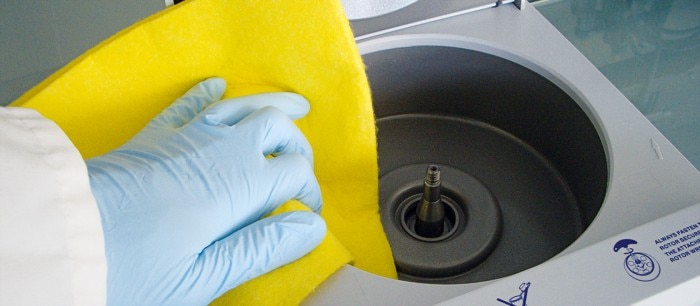
After cleaning, inspect and wipe the centrifuge lid and chamber. Remove any spills inside to keep the machine safe and tidy.
Regular cleaning of the rotor and buckets helps maintain balance during runs. This protects the centrifuge motor from extra strain.
Disinfection and Sterilization Methods
Disinfection kills germs on the centrifuge. Use a disinfectant suitable for lab use. Spray surfaces and let the solution sit as instructed on the safety data sheet. Avoid soaking rotors for too long to prevent damage.
For biological samples, sterilization may be needed. Autoclaving rotors is common if allowed by the manufacturer. Otherwise, use chemical sterilants but follow strict decontamination protocols.
Cleaning and sterilization must match the lab’s biosafety level. This keeps the environment safe and free from laboratory contamination.
Cleaning Frequency and Maintenance Schedule
The centrifuge cleaning frequency depends on use. After each run with biological or hazardous samples, clean the machine. Routine cleaning of rotors and buckets should be weekly if in heavy use.
Schedule thorough maintenance monthly. This includes checking the centrifuge motor care and lubrication if needed. A well-kept machine lasts longer and works better.
Keep a log of cleaning and maintenance. This helps labs track proper care and avoid missed cleaning cycles.
Always clean spills immediately to stop sample spread.
Routine cleaning prevents buildup of chemical residue and sample debris. This also maintains lab hygiene standards.
Hazardous Material Cleanup
Handling spills from hazardous samples is critical. Use a decontamination procedure designed for the sample type. Wear full PPE and clean inside a biosafety cabinet.
Absorb spills with lab-approved materials. Then apply disinfectant spray. Dispose of waste safely according to lab rules. This prevents exposure and keeps the centrifuge safe for future use.
Cleaning after hazardous spills must be documented. This is part of good lab practice and risk control.

Removing Residues and Cleaning Tubes
Residue inside centrifuge tubes can cause errors. Clean tubes with mild soap and water. Use a brush for hard-to-reach areas. Rinse thoroughly and dry before reuse.
Remove any dried material from the centrifuge chamber. Wipe surfaces with disinfectant to stop contamination. Keeping tubes and the chamber clean supports accurate results.
For sticky residues, a soft solvent may help but check compatibility with your tubes and rotor.
Centrifuge Calibration and Additional Care
Regular cleaning supports accurate centrifugation cycles. Keep the machine calibrated to ensure speed and timing are correct. This improves sample separation and safety.
Check the centrifuge motor for signs of wear. Clean vents to stop dust buildup. Follow the manufacturer’s recommendations for lubrication and part replacement.
Proper care reduces repair costs and downtime. This keeps your lab running smoothly.
Comparison of Cleaning Methods
| Method | Use Case | Pros | Cons |
|---|---|---|---|
| Mild Detergent | Routine cleaning | Safe, gentle on parts | May not kill all germs |
| Disinfectant Spray | Pathogen removal | Kills bacteria and viruses | May harm rotors if overused |
| Autoclaving | Sterilization | Complete sterilization | Not suitable for all rotors |
Choosing the right method depends on sample type and centrifuge parts. Mix methods for best results.
For cleaning front-loader washing machines, labs often apply similar care principles of routine cleaning and safety. Learn detailed steps on how to clean front loader washing machine filter to see parallels in maintenance habits.

Step-by-Step Cleaning Guide
- Unplug the centrifuge and wear PPE.
- Remove rotors and buckets carefully.
- Clean rotors and buckets with mild detergent and brush.
- Rinse and dry all parts thoroughly.
- Wipe inside the centrifuge chamber and lid.
- Apply disinfectant spray and let it sit as per instructions.
- Reassemble parts only when fully dry.
- Record cleaning in maintenance log.
Following this guide maintains machine safety and sample purity.
Table of Recommended Cleaning Agents
| Agent | Purpose | Notes |
|---|---|---|
| Mild Detergent | Remove dirt and residue | Non-corrosive, safe for rotors |
| 70% Isopropyl Alcohol | Disinfection | Evaporates quickly, avoid excess use |
| Hydrogen Peroxide | Sterilization | Use as per safety guidelines |
Always check the safety data sheet for proper use and disposal of these agents.
Maintaining a clean centrifuge aligns with broader laboratory hygiene practices. For example, understanding how to use bleach to clean washing machine can offer insight into effective disinfectant use in heavy-use machines.
Common Issues and Troubleshooting
Residue buildup can cause imbalance and noise. Clean regularly to avoid this. If the rotor won’t spin smoothly, check for dirt or damage. Avoid harsh chemicals that can cause corrosion.
Unusual smells often mean biological samples were not cleaned properly. Use disinfectants and ensure the centrifuge is dry before storage.
Conclusion
Cleaning a centrifuge machine is key for lab safety and accuracy. Follow the right cleaning steps and safety rules to keep your equipment in top shape. Regular care protects the centrifuge motor and parts from damage.
Always use recommended cleaning agents and PPE. Keep a maintenance log and follow your lab’s protocols for hazardous spills. This ensures a clean, safe lab environment.
Integrating routine centrifuge care with broader lab hygiene practices supports reliable lab results in 2026 and beyond.
Frequently Asked Questions
How often should a centrifuge be cleaned?
Centrifuges should be cleaned after every use, especially when handling biological or hazardous samples, to prevent contamination and maintain performance.
What cleaning agents are safe for centrifuge rotors?
Mild detergents and disinfectants approved for laboratory use are safe. Avoid harsh chemicals that cause corrosive residue or damage the rotor surface.
How do I clean a centrifuge after a hazardous sample spill?
Use personal protective equipment and clean the spill inside a biosafety cabinet. Follow your lab’s decontamination protocols and use appropriate disinfectant sprays.
Can I remove centrifuge rotors for cleaning?
Yes, always remove rotors carefully as per the centrifuge user manual to clean thoroughly. This prevents residue buildup and protects the centrifuge motor.
What safety guidelines should I follow when cleaning a centrifuge?
Wear gloves and eye protection, ensure the centrifuge is unplugged, and clean in a well-ventilated area. Always follow the safety data sheet instructions for cleaning agents.

Michael Peterson is a home appliance writer focused on practical washing machine care, maintenance, and troubleshooting. He shares simple, reliable tips to help readers keep their washing machines running efficiently, avoid common problems, and extend appliance life.