Why You Should Clean Your Washing Machine With Vinegar
In our experience, washing machines build up grime, mold, and odors over time. Vinegar is a natural way to clean without harsh chemicals. It breaks down detergent residue and kills mildew. We found vinegar helps keep the washing machine drum fresh and stops bad smells from coming back.
Vinegar is also eco-friendly. It is safe for the environment and your home. Using vinegar instead of bleach means less risk of damage to your washer seals and gaskets. If you want more ideas on natural cleaning, check out our guide on how to clean washing machine with bicarb and vinegar.
Cleaning your washing machine regularly is part of good washing machine maintenance tips. It extends your washer’s life and keeps clothes smelling nice.
How Much Vinegar To Use For Washing Machine Cleaning
The amount of vinegar depends on your washer type. For front-loading washers, use 2 cups of white vinegar. Top-loading washers need about 1 to 2 cups. Too little vinegar won’t clean well. Too much may cause a strong vinegar smell.
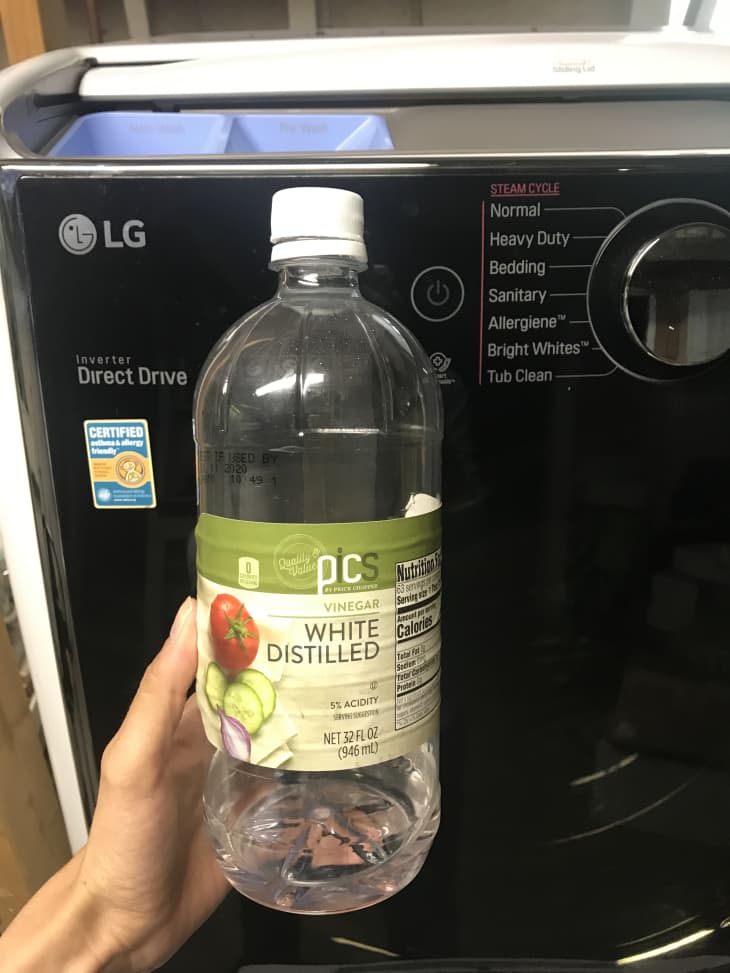
We always use white vinegar because it is mild but effective. It works well to remove fabric softener residue and hard water deposits inside the drum and pipes. For the best results, run a full cleaning cycle with vinegar.
Here is a quick guide to vinegar amounts for different washers:
| Washing Machine Type | Vinegar Amount | Cleaning Notes |
|---|---|---|
| Front Load Washer | 2 cups (480 ml) | Pour into detergent slot, run cleaning cycle |
| Top Load Washer | 1-2 cups (240-480 ml) | Add directly into drum, run hot water cycle |
We tested both vinegar and commercial washing machine cleaners. Vinegar gave similar odor removal and mold control results without the cost or chemicals. You can check out more tips on washing machine cleaning solutions for extra ideas.
Step-By-Step White Vinegar Cleaning Instructions
Cleaning your washing machine with vinegar is easy. Here is the best way we found to do it:
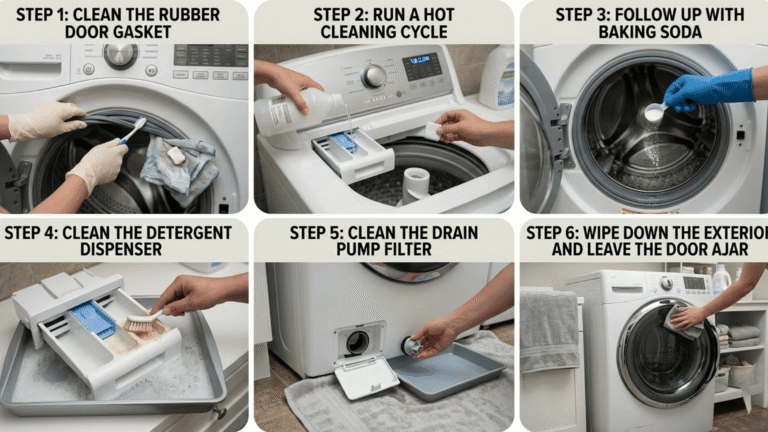
Step 1: Remove any clothes and clean the lint filter and detergent drawer.
Step 2: For a front load washer, pour 2 cups of white vinegar into the detergent slot.
Step 3: For a top load washer, add 1 to 2 cups of vinegar directly into the drum.

Step 4: Run the hottest and longest cleaning cycle available. This helps break down residues and kills mold.
Step 5: After the cycle finishes, wipe down the rubber gasket and inside the door with a vinegar-soaked cloth to prevent mildew.
For extra cleaning power, we sometimes add baking soda after the vinegar cycle. This helps clear washing machine residue cleaning and odors.
Adding vinegar during the rinse cycle can also help soften clothes and remove detergent buildup.
Use this simple routine monthly to keep your washer fresh and clean.
For more cleaning combinations, see our guide on how to clean washing machine with vinegar and baking soda.
Vinegar vs Bleach For Washing Machine Cleaning
Many people ask if vinegar is better than bleach for washing machine odor elimination and mold removal. We tested both and here is what we found:
| Cleaning Agent | Effectiveness | Safety | Environmental Impact |
|---|---|---|---|
| White Vinegar | Good for odor, mold, residue | Safe on seals, gaskets | Eco-friendly, biodegradable |
| Bleach | Strong disinfectant | Harsh on rubber parts | Can harm environment if overused |
Vinegar is gentler and safer for regular use. Bleach kills germs quickly but can cause damage if used often. For long-term washing machine maintenance, vinegar is our preferred choice.
We suggest following your washing machine manufacturer recommendations on chemical use to avoid voiding warranties.
Tips To Prevent Washer Mildew And Smells
Cleaning with vinegar is great, but prevention is best. Here are some tips we use to stop mold and odors:
- ✅ Leave the door open after use to air dry the drum and seal.
- ✅ Use the right amount of detergent to avoid residue buildup.
- ✅ Run a monthly vinegar cleaning cycle.
- ✅ Wipe the rubber gasket regularly to prevent mildew.
- ✅ Check and clean the washing machine filter every few months.
These small steps help your washer last longer and keep clothes fresh.
We also recommend using an environmentally safe cleaner for routine care. This reduces harsh chemical exposure in your home.
To learn about cleaning mold specifically, see our detailed article on how to clean washing machine with mold.
Deep Cleaning Your Washer Drum Using Vinegar
For a washing machine deep clean, vinegar works best with warm water and a longer cleaning cycle. We suggest using the hottest water setting your washer allows. This helps dissolve hard water deposits and detergent buildup inside the drum and pipes.
After adding vinegar, let the cycle run fully. For front load washers, check the door seal and clean it by hand with a cloth dipped in vinegar. This area often traps mold and mildew.
We have found that after deep cleaning, a rinse cycle helps remove any leftover vinegar smell.
Repeat deep cleaning every 3 months or more often if your washer has heavy use or bad odors.
How Often To Clean Your Washing Machine With Vinegar
We clean our washing machine with vinegar every month. This keeps odors away and stops mold from growing. If you live in a hard water area or use a lot of detergent, clean it more often.
:max_bytes(150000):strip_icc()/how-to-wash-cloth-diapers-2146226-03-b8b4b7c954624ca98c049eec14a91570.jpg "Yes, You Can Clean Your Washing Machine Using Just Vinegar—Here's How (Figure)")
For light use, cleaning every 2 months may be enough. Regular cleaning also helps keep your washing machine filter clear and working well.
Remember, prevention saves money on repairs and keeps clothes smelling fresh. Combine vinegar cleaning with good washer habits for best results.
For a full routine on washing machine care, see our guide on how to clean front load washing machine.
⭐ Expert Insight: Best Vinegar Washing Machine Cycle
Choosing the right cycle is key. We recommend a high-temperature, long-duration cleaning cycle if your washer has one. This helps vinegar reach deep inside pipes and the drum. Avoid quick or cool cycles for cleaning.
If your machine lacks a cleaning cycle, use the hottest normal cycle with no clothes inside. This gives good disinfection and residue removal.
Check your washing machine manufacturer recommendations for details. Some brands offer special cleaning modes designed for vinegar use.
Following this advice will improve machine longevity and keep your laundry fresh.
📑 Quick Facts About Vinegar Washing Machine Cleaning
- Use 2 cups of white vinegar for front load washers.
- Use 1-2 cups for top load washers.
- Run the hottest, longest cycle available for best results.
- Wipe seals and gaskets after cleaning to prevent mildew.
- Clean monthly or as needed depending on use.
Vinegar is an affordable, easy, and eco-friendly cleaner for your washing machine.
Frequently Asked Questions
How much vinegar should I use to clean my washing machine?
Use about 2 cups (480 ml) of white vinegar for a front load washer and 1 to 2 cups for a top load washer during a cleaning cycle.
Can I use vinegar instead of bleach to clean my washing machine?
Yes, vinegar is a safer, eco-friendly option that removes odors and mold without harsh chemicals.
How often should I clean my washing machine with vinegar?
Cleaning once a month helps prevent mold, mildew, and residue buildup and keeps your washer fresh.
Is white vinegar safe for all types of washing machines?
White vinegar is safe for both front-loading and top-loading washers when used in the right amount.
What is the best way to remove mold from the washing machine gasket?
Apply vinegar directly on the gasket, let it sit for 10 minutes, then scrub gently to remove mold and mildew.

Michael Peterson is a home appliance writer focused on practical washing machine care, maintenance, and troubleshooting. He shares simple, reliable tips to help readers keep their washing machines running efficiently, avoid common problems, and extend appliance life.