Why Cleaning Your CPAP Machine Matters
In our experience, cleaning your CPAP machine is key to good health and better sleep. The device helps with sleep apnea but can collect germs if not cleaned right. We found that a daily cleaning routine keeps the parts fresh and stops mold from growing. Plus, proper care extends the machine’s life. It’s worth the time to keep your setup safe and working well.
We also learned about the importance of following manufacturer guidelines. That keeps the warranty safe and avoids damage. For example, using the right soap and drying methods matters a lot. You can find detailed tips on how to clean ResMed CPAP machine parts in our trusted guide. This helps us avoid cleaning mistakes that some users make.
We always recommend a clear cleaning schedule. Daily cleaning for masks and humidifier chambers, and weekly for headgear and tubing, works best. This routine helps fight allergy triggers and keeps your CPAP device odor-free.
CPAP Daily Cleaning Routine
A simple daily cleaning routine is the best way to keep your CPAP mask and equipment safe. We start by washing the mask cushion with warm soap and water. This removes oils and dirt that build up from skin and air. Then we rinse the tubing with distilled water to avoid mineral spots. Cleaning the humidifier chamber daily stops mold spores from forming.
Be sure to use mild soap or a recommended disinfectant solution. Harsh cleaners can wear out the mask or tubing. After washing, we let parts air dry on a clean towel. Avoid direct sunlight or heat that can warp plastic parts. A good drying method is key to stopping bacterial growth.
🚀 Beginner Tip
Always use distilled water in your humidifier. Tap water can cause hard water spots and invite mold. This small step makes a big difference in keeping your CPAP clean and allergy-free.
Cleaning CPAP mask cushion gently daily helps the seal stay soft and comfy. We wash headgear straps weekly, as they don’t get dirty as fast but still collect sweat and skin oils.
Weekly CPAP Maintenance Guide
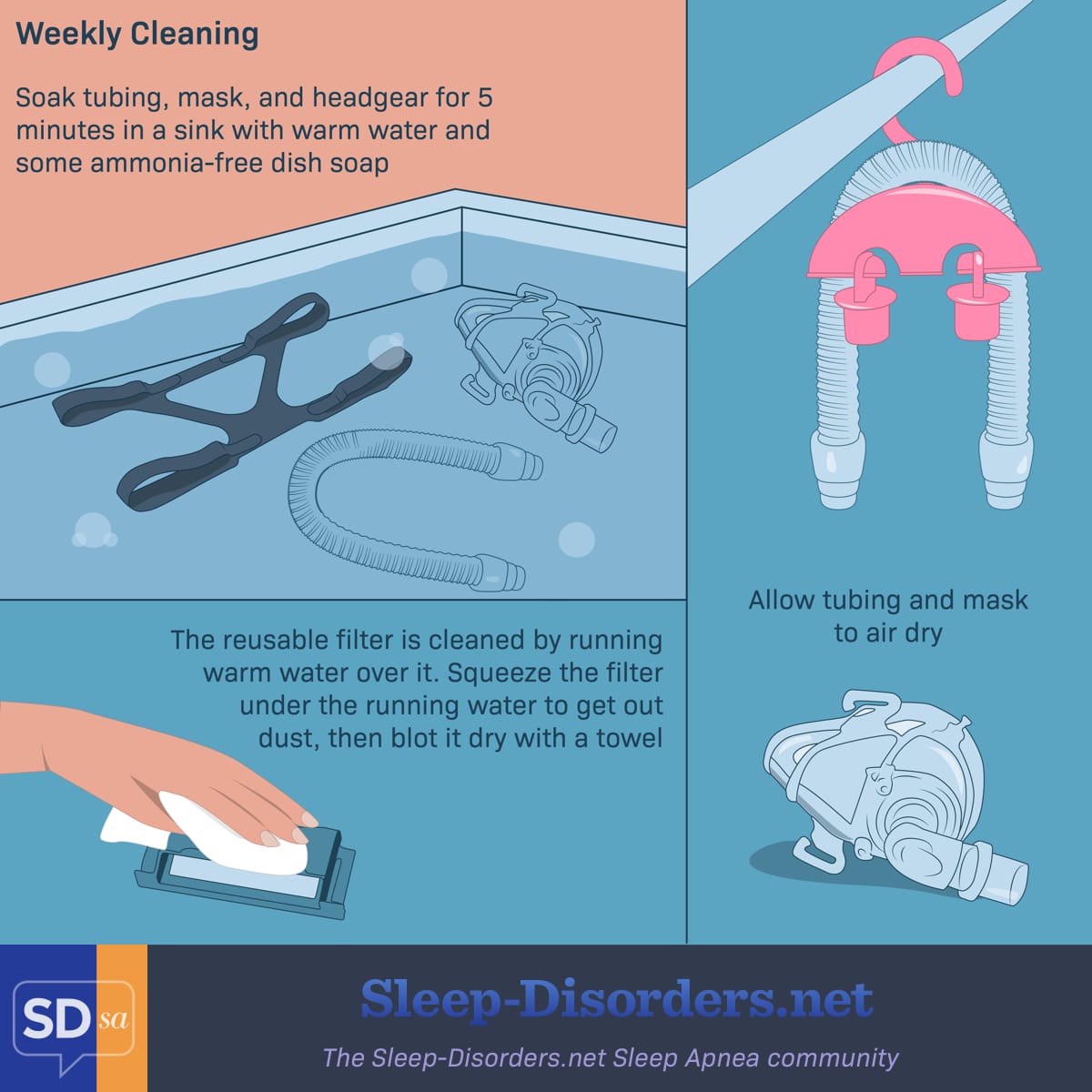
Once a week, we get more thorough with cleaning. This includes washing the headgear, tubing, and accessories like filters and water chambers. We soak the tubing in warm soapy water, then rinse well to clear any buildup inside. Headgear straps go into a gentle cycle in the washing machine or hand wash with mild soap.
Replacing or cleaning CPAP filters at this time is smart. Dirty filters block air and cause bad odors. We check the filter’s condition and swap it as needed to keep the machine running smoothly.
:max_bytes(150000):strip_icc()/how-to-clean-cpap-3015322-v1-5c1ac1cc46e0fb0001e27563.png "Clean a CPAP Machine: A How-To Guide (Figure)")
📑 Quick Facts
CPAP Filter Replacement: Change every 1-3 months
Headgear Washing: Weekly
Mask Cushion Cleaning: Daily
Humidifier Chamber Cleaning: Daily
We also use CPAP cleaning wipes for quick touch-ups when we travel. These wipes kill germs and freshen parts but don’t replace deep cleaning. They are handy to keep things fresh between washes.
CPAP Machine Mold Prevention Tips
In our tests, mold and bacteria grew fast if the CPAP humidifier chamber stayed wet too long. To stop this, we empty the water chamber every morning. Then we wipe it dry before refilling it with fresh distilled water. This simple habit cuts down mold spores and keeps the air clean.
We avoid using tap water because minerals feed mold growth. Using distilled water and cleaning the chamber daily is the best way to prevent allergic reactions caused by mold. Also, store your CPAP parts in a dry, clean place to keep them safe.
✅ Checklist for Mold Prevention
- ✅ Empty humidifier water each morning
- ✅ Use distilled water only
- ✅ Clean chamber daily with mild soap
- ✅ Dry all parts completely before storing
- ✅ Store in a dry, dust-free area
We also found that some users rely on UV sanitizers. While UV light kills many germs, it should not replace washing. It works well as an extra step but always follow up with soap and water cleaning.
Common CPAP Cleaning Mistakes to Avoid
We have seen many people make simple errors that harm their CPAP machines. One mistake is using strong chemicals or bleach. These damage the mask cushion and tubing. Another error is letting parts air dry in sunlight or near heat, which warps plastic.
Skipping daily cleaning or waiting too long to replace filters causes bad smells and health risks. Also, some folks wash headgear and tubing too rarely, letting dirt and oils build up. Following a clear cleaning schedule stops these issues.
Avoid using tap water in the humidifier chamber. It leads to mold and scale buildup. Using distilled water is a small fix that helps a lot. Finally, do not soak the machine motor or electrical parts. Clean only the removable parts to keep the warranty intact.
⚖️ Pros & Cons of CPAP Cleaning Methods
| Method | Pros | Cons |
|---|---|---|
| Soap and Water | Easy, safe, removes dirt well | Time-consuming, needs drying |
| UV Sanitizers | Kills germs quickly | Does not remove dirt, costly |
| Cleaning Wipes | Fast, portable | Surface-only, expensive over time |
By understanding these pros and cons, we choose the right method for each part. Soap and water remain the best for daily cleaning.
Caring for CPAP Accessories
Our experience shows that CPAP accessories need care too. This includes the headgear, chin straps, and mask cushions. We hand wash headgear weekly with mild soap to remove sweat and oils. This keeps straps soft and stretchy.
Mask cushions get cleaned daily to keep the seal tight and skin safe. We avoid harsh scrubbing to not damage the soft silicone. For tubing, regular rinsing and drying stop buildup inside. Accessories sanitation prevents device odor and allergic reactions.
📌 Step-by-Step Guide for Mask Cushion Cleaning
- Remove the mask cushion from the frame
- Soak in warm water with mild soap for 10 minutes
- Gently rub to remove oils and dirt
- Rinse well with distilled water
- Air dry on a towel away from sunlight
Keeping these parts clean is key to comfort and health. We recommend checking your mask cushion for wear and tear monthly. Replace it if it cracks or loses shape.
CPAP Machine Maintenance Guide
Taking care of the CPAP machine itself is just as important. We clean the outside with a damp cloth to remove dust. Never get water into the motor or power supply. Check the filter slot for dirt regularly and replace filters on time.
Following the manufacturer’s care instructions keeps the warranty valid. We suggest reading the manual carefully before trying new cleaning products. Proper maintenance means fewer repairs and better machine life.

🚀 Expert Insight
Many users ask about removing CPAP device odor. We found that regular cleaning and filter changes solve most smells. For stubborn odors, washing all parts thoroughly and airing them out helps a lot.
We also found that some CPAP machine care products promise quick cleaning. While they can help, they don’t replace daily soap and water washing. Use them as a backup, not the main method.
Final Thoughts on CPAP Cleaning in 2026
Keeping your CPAP machine and parts clean is easy with the right routine. We have seen great results from daily washing, weekly deep cleaning, and smart habits like using distilled water. Avoid cleaning mistakes to protect your health and device.
Remember, your CPAP helps your sleep and breathing. Treat it well by following a clear cleaning schedule and using gentle care products. This keeps your sleep apnea treatment safe and effective.
For more on the best ways to clean CPAP equipment, check out the official advice on cleaning CPAP equipment. Stay safe and breathe easy!
| Cleaning Task | Frequency | Recommended Method |
|---|---|---|
| Mask Cushion | Daily | Soap and water, air dry |
| Headgear Straps | Weekly | Hand wash or machine gentle cycle |
| Humidifier Chamber | Daily | Soap and distilled water rinse |
| CPAP Filters | Every 1-3 months | Replace with new filters |
This table helps us keep track of our cleaning schedule. Following it closely makes a big difference in health and machine care.
We also weigh the pros and cons of cleaning methods to choose what fits best for each part. Soap and water remain trusted and safe, especially for daily use.
| Cleaning Product | Use | Notes |
|---|---|---|
| Soap and Water | Daily cleaning | Mild soap only |
| Disinfectant Solution | Occasional deep clean | Follow product directions |
| CPAP Cleaning Wipes | Quick freshening | Not a full clean |
| UV Sanitizer | Extra germ kill | Use with washing |
By using this guide, we keep our CPAP machines clean and safe in 2026. It’s a simple way to protect your health and get the best sleep possible.
Frequently Asked Questions
How often should I clean my CPAP mask?
It’s best to clean your CPAP mask daily to avoid bacterial buildup and keep the cushion soft.
Can I use regular soap to clean CPAP parts?
Mild soap and water work well, but avoid harsh chemicals that can damage the mask or tubing.
How do I prevent mold in my CPAP humidifier?
Use distilled water and clean the humidifier chamber daily to stop mold and bacteria growth.
Is it safe to use UV sanitizers for CPAP cleaning?
UV sanitizers can help reduce germs, but they should not replace regular washing and drying.
When should I replace my CPAP filter?
Filters need replacing every 1-3 months or sooner if they look dirty or clogged.

Michael Peterson is a home appliance writer focused on practical washing machine care, maintenance, and troubleshooting. He shares simple, reliable tips to help readers keep their washing machines running efficiently, avoid common problems, and extend appliance life.