Understanding the Prewash Cycle in Washing Machines
The prewash cycle is a special wash step in many modern washing machines. It softens dirt and stains on clothes. This helps the main wash clean clothes better. For tough laundry, the prewash cycle can make a big difference.
Automatic washing machines often include a washing machine prewash function. This adds an extra rinse and soak before the main wash starts. It is good for dirty or heavily stained clothes. Using the prewash can save time and effort in hand scrubbing.
For a deeper understanding of how this works, analyzing resources on what the prewash cycle does provides excellent foundational context.
When learning about prewash, it is useful to compare it with other cycles. For example, the difference between the prewash vs main wash cycles shows why both steps matter.
How the Prewash Cycle Works
During the prewash, the washing drum fills with water at a set temperature. Clothes soak to loosen dirt. Some machines use a gentle wash agitation to help remove grime. The cycle lasts a few minutes before draining the water.
After prewash, the main wash cycle begins. It uses more detergent and stronger agitation. The main wash cleans the clothes thoroughly. The prewash sets the stage by breaking down stains and dirt.
Modern machines use sensors like soil level sensor and load size detection. These adjust the prewash duration and water use. This improves efficiency and cleaning power.
In many machines, you add detergent to a special detergent compartment for prewash. This detergent helps break down tough stains early on.
Benefits of the Prewash Cycle
The main benefit is better cleaning. Prewash loosens tough stains like mud and grease. This helps the main wash remove them fully. It is useful for kids’ clothes, workwear, and sports gear.
Prewash also improves laundry hygiene. It rinses away dirt and germs before the main wash. This can be helpful with heavily soiled clothes or allergy concerns.
Another benefit is saving time and effort. Using prewash avoids soaking clothes by hand. It does the hard work automatically. Plus, it can protect clothes by reducing harsh scrubbing.
However, using prewash adds to water and energy use. This is important to consider for sustainability and cost.
Energy and Water Consumption of Prewash
The prewash cycle uses extra water and energy. It fills the drum with water and runs a soak or gentle wash. This means a longer wash program and more power use.
Yet, washing machine innovation in 2026 focuses on efficiency. Many machines adjust prewash length based on how dirty the clothes are. Sensors help use only the needed water and energy.
Choosing the right prewash settings can balance cleaning and resource use. For lightly soiled clothes, skipping prewash saves energy. For heavy stains, prewash improves cleaning while keeping energy use sensible.
Users should check their washing machine settings and manuals. This helps understand how prewash affects their machine’s water use and energy bills.
Prewash and Fabric Types
Prewash is best for tough fabrics like cotton or denim. These can take strong washing and soak without damage. It helps remove dirt trapped deep in fibers.
For delicate fabrics, prewash might be too harsh. Fabrics like wool or silk can shrink or lose shape if soaked too long. These should use gentle or no prewash cycles.
Some washing machines offer different prewash options based on fabric type. This protects sensitive clothes while cleaning well.
Matching prewash use with fabric care labels is key to keeping clothes in good shape.
Laundry Prewash Tips for Best Results
To get the most from your prewash cycle, follow these tips. First, sort clothes by soil level and fabric type. Use prewash only for very dirty loads.
Next, add the correct prewash detergent to the dedicated compartment. Use detergents made for prewash to boost stain removal.
Also, select the right wash cycle temperature. Warm water works well for most stains in prewash. Avoid hot water for delicate fabrics.
Check your washing machine timer and cycle options carefully. Some machines let you customize prewash duration for better cleaning.
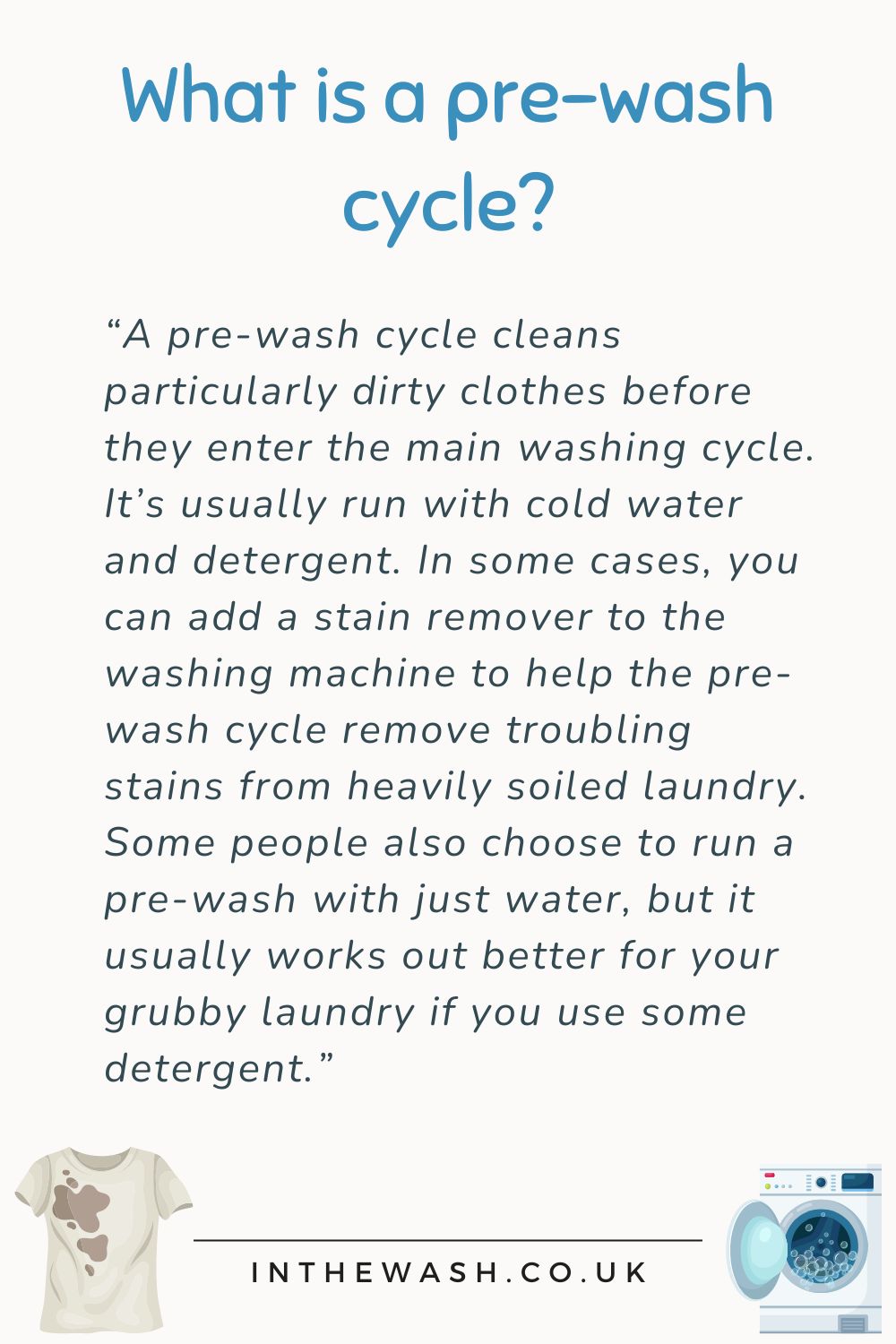
Washing Machine Types and Prewash Features in 2026
Both top load and front load machines can have prewash cycles. Front loaders often use less water and energy overall. In 2026, many models include smart sensors and automatic dispensers.
Automatic washing machines prewash function can adjust to load size and soil level. This means better cleaning with less waste. Some models link to apps for remote control and cycle advice.
Washing machines today also offer multiple clothes washing cycles. Prewash is one key step among rinse, spin, and main wash cycles. Knowing how each cycle works helps users pick the best program.
For bulky items, there are special cycles. Learn more about washing large loads and their prewash needs in this guide on cleaning bulky items in washing machines.
Prewash vs Main Wash: What’s the Difference?
The prewash cycle is gentle. It mostly soaks and rinses clothes. It uses less detergent and light agitation. The goal is to loosen dirt and soften stains.
The main wash is stronger and longer. It uses more detergent and water. Agitation is vigorous to remove dirt fully. It also rinses and spins clothes to get them clean and dry.
Using both cycles in order helps clean tough clothes well. Skipping prewash may mean stains stay after the main wash.
Below is a simple comparison table of features:
| Feature | Prewash Cycle | Main Wash Cycle |
|---|---|---|
| Purpose | Loosen dirt and stains | Deep cleaning |
| Detergent Use | Low or special detergent | Standard detergent amount |
| Agitation | Gentle | Strong |
| Water Temperature | Cool to warm | Warm to hot |
| Cycle Length | Short | Longer |
Understanding these differences helps users choose the right settings. For heavily soiled clothes, use both. For light loads, skip prewash to save resources.
Machine Maintenance and Prewash
Using prewash regularly means more water and detergent flow. It is important to keep the washing machine clean. This prevents build-up in the detergent compartment and drum.
Check and clean filters and dispensers often. Wipe rubber seals to avoid mold growth. Proper maintenance extends machine life and keeps laundry fresh.
Learn cleaning tips for your specific machine type and model. For instance, see this guide on how to clean front loader Samsung washing machine.
Regular care ensures prewash cycles work smoothly and clothes come out clean.
Conclusion: Is Prewash Worth It in 2026?
The prewash cycle adds value for many laundry needs. It improves stain removal and hygiene. For tough, dirty clothes, it is worth the extra water and energy.
Modern washing machines smartly control prewash to limit resource use. They also offer flexible cycles for different fabrics and soils.
To get the best results, use prewash wisely. Match it to load type, soil level, and fabric care instructions. This saves money and protects clothes.
Prewash is a key washing machine feature in 2026. It blends technology with practical benefits for cleaner, fresher laundry every day.
✅ Checklist for Using Prewash Cycle:
- ✅ Sort clothes by soil and fabric type
- ✅ Use prewash for heavily soiled items
- ✅ Add detergent to prewash compartment
- ✅ Select correct water temperature
- ✅ Maintain your washing machine regularly
🚀 Beginner Tip: If unsure about prewash, start with small loads and observe results. Adjust settings based on cleaning needs and energy use.
Frequently Asked Questions
What does the prewash cycle do in a washing machine?
The prewash cycle rinses and soaks clothes before the main wash. It loosens dirt and stains, helping the main wash clean better.
When should I use the prewash function?
Use the prewash cycle for heavily soiled clothes or items with tough stains. It helps remove grime before the main wash.
Does the prewash cycle use more water and energy?
Yes, the prewash adds to water and energy use. However, modern washing machines optimize this for better efficiency.
Can I add detergent to the prewash cycle?
Many machines have a separate detergent compartment for prewash. Using detergent helps break down tough stains early.
How does prewash compare with the main wash cycle?
Prewash focuses on soaking and rinsing to prep clothes. The main wash uses stronger agitation and detergent to clean deeply.

Keith Boyd Is A Seasoned Appliance Care Expert With Over A Decade Of Experience In Home Appliance Maintenance. His Authoritative Insights On Washing Machine Care And Upkeep Are Trusted By Homeowners Nationwide. With A Passion For Educating Others, Keith Shares Valuable Tips That Ensure Your Appliances Run Smoothly For Years To Come.