Understanding Washing Machine Filters
Many people wonder if washing machines have filters. The answer is yes. Almost all modern washers have some kind of washing machine lint filter. These filters stop fabric fibers, lint, and debris from clogging the water drainage system. Knowing about these filters helps you keep your washer running well.
For a deeper understanding of this mechanic, analyzing resources on how washing machines filter water provides excellent foundational context. This knowledge shows why regular washing machine filter maintenance is critical for your washer’s health.
The Purpose of Washing Machine Filters
The main job of a washing machine filter is to catch lint, fabric fibers, and small debris during washing cycles. This keeps the drain pump and pipes free of blockages. Without a filter, these particles could build up and cause damage.
Filters also help avoid residue buildup, which can lead to foul smells and poor water drainage. In some washers, the filter acts as a washing machine debris filter that traps coins, buttons, and other small objects.
Maintaining a clean filter improves energy efficiency. When the machine drains water smoothly, it uses less power and lasts longer. Thus, the filter plays a key role in the washing machine lifecycle.
Types and Location of Washing Machine Filters
There are different washing machine filter types. The two main kinds are lint filters and drain filters. Lint filters catch fibers from clothes. Drain filters stop larger debris from reaching the pump motor.
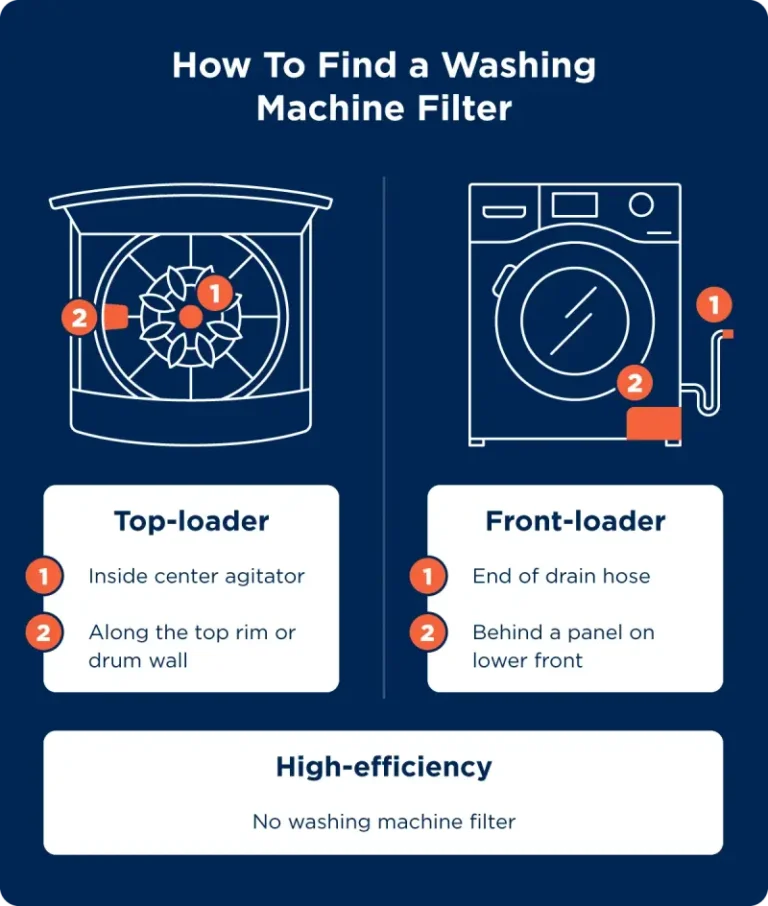
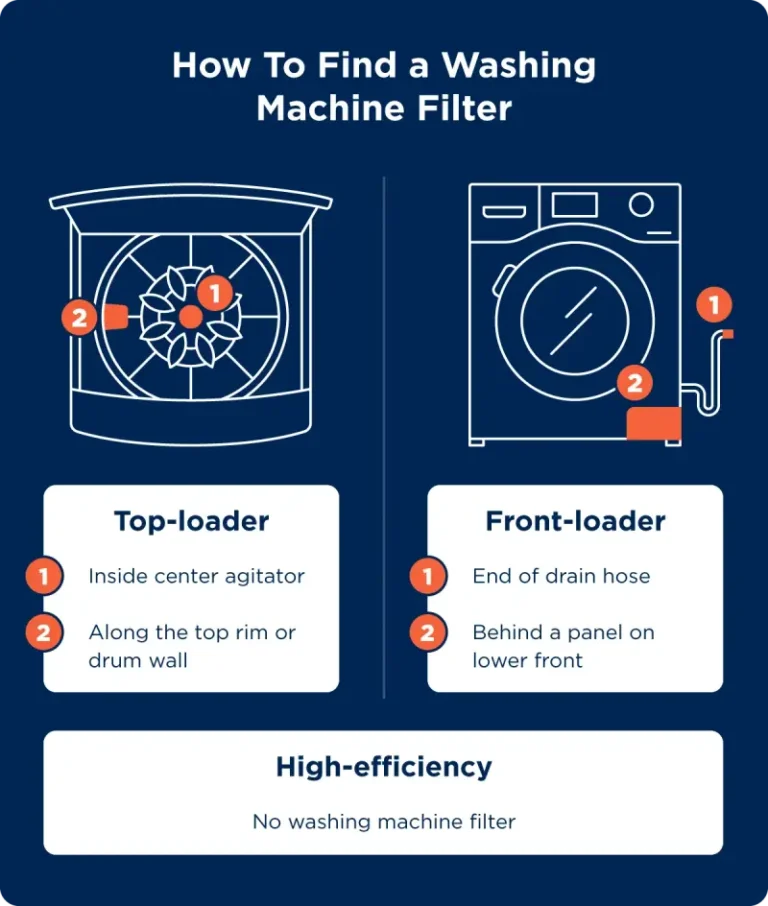
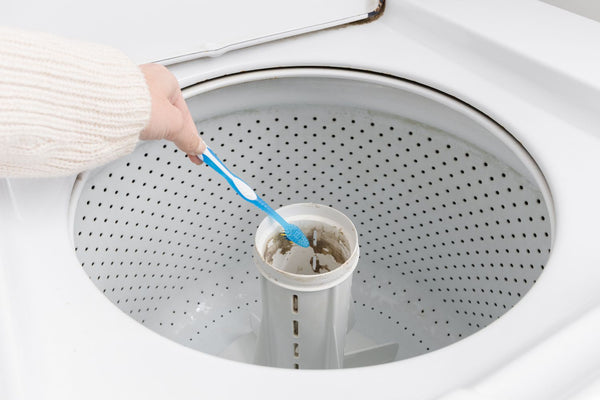
Filter location varies by machine. In a front load washing machine filter, you usually find it behind a small door at the bottom front. For a top load washing machine filter, the filter may be inside the agitator or near the tub.
Knowing your filter’s exact place is important for cleaning. Always check the washing machine manual to locate it safely. You can also explore guides on how to find and clean a washing machine filter for more details.
How to Clean Washing Machine Filter
Cleaning the filter is simple but vital. First, unplug the washer and find the filter cap. Open it carefully to avoid water spills. Remove the filter basket or mesh and clear out lint and debris.
Use warm water and a soft brush to remove detergent residue and buildup. Check the filter housing for blockages. Once clean, replace the filter and close the cap tightly.
Regular cleaning every 1 to 3 months prevents a clogged washing machine filter. This avoids common issues like slow drainage or the washing machine filter not draining properly.
Step-by-Step Filter Cleaning
- Turn off and unplug the washing machine.
- Locate the filter cap at the bottom front or inside the agitator.
- Open the cap and pull out the filter basket gently.
- Remove lint, fabric fibers, and debris from the mesh.
- Rinse the filter under warm water and scrub lightly if needed.
- Check the filter housing for residue buildup and clear if necessary.
- Put the filter back and close the cap securely.
- Plug in and run a short wash cycle to check proper drainage.
Ignoring this cleaning can lead to filter problems that damage the drain pump. It also increases repair costs and shortens your washer’s lifespan.
Common Washing Machine Filter Problems
Many filter issues arise from neglect. A clogged washing machine filter causes water to drain slowly or not at all. You might notice strange noises from the pump motor or error codes on your machine’s display.
Detergent residue and lint accumulation can block the filter mesh. This leads to poor washing results and mold growth. A damaged or broken filter basket might let debris enter the drain hose, causing bigger problems.
Replacing a faulty filter is often cheaper than fixing a broken pump. Knowing when to replace the filter is key to long-term care.
🚀 Beginner Tip: Filter Replacement
Check your filter’s lifespan in the manual or with the manufacturer. Most filters last several years but need replacement if cracked or worn. Prompt replacement keeps your washing machine working well.
How Often to Clean and Replace Washing Machine Filters
Experts advise cleaning filters every 1 to 3 months. If you wash heavily soiled clothes often, clean more often. Replacement depends on the model and usage, usually every 3 to 5 years.
Set a maintenance schedule that matches your washing cycles and filter condition. Keeping track helps avoid unexpected breakdowns. Use a calendar reminder or app to stay on top of filter care.
Proper filter care supports smooth water drainage and extends your washer’s energy efficiency. It also reduces risks of mold and bad odors linked to filter problems.
Installation and Replacement Tips
Installing or replacing a washing machine filter is straightforward. First, buy a filter compatible with your washer model. Check the manual or supplier for the right part.
Remove the old filter gently. Clean the filter housing before installing the new one. Fit the new filter basket or mesh securely and close the filter cap tightly.
Test by running a short cycle. If water drains well and no leaks occur, installation is correct. Improper installation can cause filter leaks or damage the pump motor.
⚖️ Filter Maintenance: Pros & Cons
- ✅ Pros: Better water drainage, less pump damage, cleaner clothes, longer washer life.
- ✅ Cons: Time needed for cleaning, occasional need for replacement parts.
Regular maintenance outweighs the small effort needed. Keeping your washing machine filter clean ensures ongoing performance and saves costly repairs.
Conclusion: Why Washing Machine Filters Matter
Washing machine filters are vital for good washer function in 2026. They trap lint, fabric fibers, and debris to protect the drain pump and pipes. This keeps water draining smoothly and clothes clean.
Cleaning and maintaining filters regularly prevents clogs and damage. Knowing where your filter is and how to clean it is essential. Following a maintenance schedule improves energy efficiency and extends your washing machine lifecycle.
Ignoring filter care leads to drainage issues, pump failure, and higher repair costs. For anyone looking to keep their washer in top shape, filter care is a must. For a detailed guide, exploring how to clean washing machine filters by brands like Samsung or Whirlpool can add value and precision to your care routine.
| Washing Machine Type | Filter Location | Filter Type |
|---|---|---|
| Front Load | Bottom front behind small door | Drain filter and lint filter |
| Top Load | Inside agitator or tub rim | Lint filter or debris filter |
| Portable Washer | Near drain hose or inside pump | Simple mesh filter |
Remember, each model may differ, so always check your washing machine manual for specifics. Learning to maintain your filter can save money and keep laundry days smooth and easy.
For additional practical advice on washing machine care, learn about how to clean washing machines with vinegar and baking soda. This complements filter maintenance for a fresh and efficient machine.
| Symptom | Possible Cause | Recommended Action |
|---|---|---|
| Water not draining | Filter blocked with lint or debris | Clean or replace filter |
| Strange noises during spin | Pump strain due to blockage | Inspect filter and drain hose |
| Washer error codes | Drainage errors | Consult manual and check filter |
| Musty smell | Mold in filter area | Deep clean filter and housing |
Staying alert to these symptoms helps prevent bigger issues. Proactive filter care is smart washing machine ownership in 2026.
Finally, consider the benefits of regular filter care summarized below. It is a simple yet powerful way to protect your appliance and enjoy clean clothes every wash.
| Benefit | Impact |
|---|---|
| Improved water drainage | Shorter wash cycles, better cleaning |
| Reduced pump stress | Longer pump lifespan, fewer repairs |
| Less odor and mold | Healthier laundry environment |
| Energy savings | Lower electricity bills |
Frequently Asked Questions
Do all washing machines have filters?
Most modern washing machines include filters, but the type and location vary by model. Filters help catch debris and lint.
How often should I clean my washing machine filter?
Experts recommend cleaning your washing machine filter every 1 to 3 months, depending on usage and lint buildup.
Where is the filter located in front load and top load washers?
In front load washers, filters are usually near the bottom front behind a small door. Top load filters are often inside the agitator or tub.
What problems can a clogged washing machine filter cause?
A clogged filter can block water drainage, cause unusual noises, reduce cleaning efficiency, or even damage the drain pump.
Can I replace my washing machine filter myself?
Yes, most filters are user-replaceable. Always check your washing machine manual for the correct filter type and installation instructions.

Michael Peterson is a home appliance writer focused on practical washing machine care, maintenance, and troubleshooting. He shares simple, reliable tips to help readers keep their washing machines running efficiently, avoid common problems, and extend appliance life.