Understanding Washing Machine Weight
The weight of a washing machine matters for many reasons. It impacts transport, installation, and floor support. Knowing the average washer weight helps in planning moves and setups. Different types like front load, top load, and portable washers vary in weight.
Heavier washing machines often use more durable materials. They can also have larger capacity. This affects both the size and weight. For example, a compact washer weight is much less than a full-sized model.
For those curious about how long a wash cycle takes, understanding machine size and weight can be a factor. Larger washers may have different cycle lengths. For more insight on timing, see our guide on how long does the washing machine take.
Overall, weight differences in washers come down to design, capacity, and brand. This affects energy efficiency and installation needs.
Typical Washing Machine Weights by Type
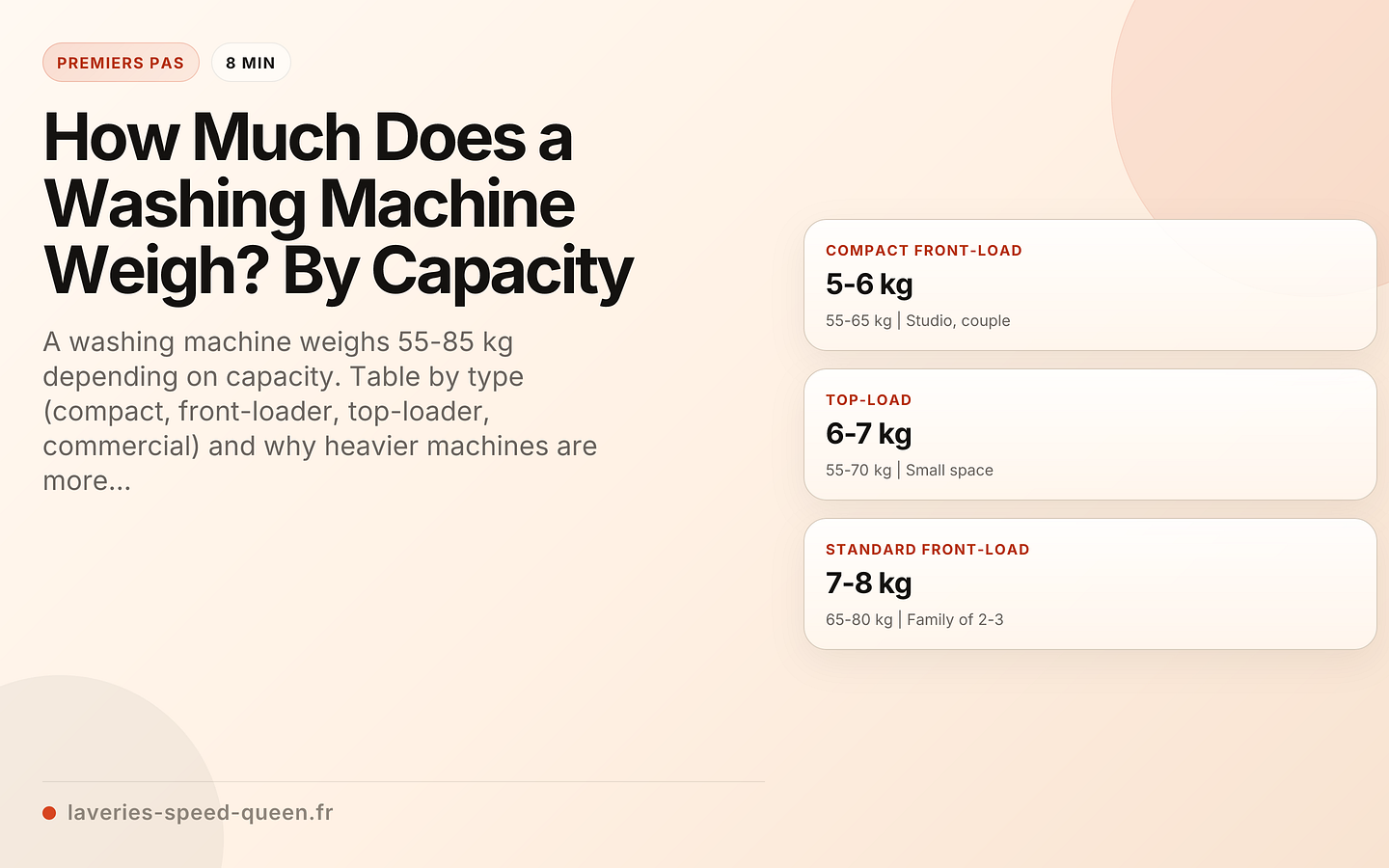
Front load washers are known for their efficiency but tend to be heavier. Their weight usually falls between 70 and 85 kilograms. This is due to their metal drums and solid construction.
Top load washing machines weigh less, mostly between 55 and 75 kilograms. They often use lighter materials and have a simpler build. However, high-capacity top loaders can approach front load weights.
Portable washing machines are designed for easy movement. Their weight ranges from 20 to 40 kilograms. This makes them ideal for small homes or travel. However, their capacity and power are limited compared to full-sized machines.
Industrial washing machine weight is much higher. These machines are built for heavy loads and last longer. They can weigh over 100 kilograms, depending on size and function.
| Washer Type | Weight Range (kg) | Typical Capacity (kg) |
|---|---|---|
| Front Load Washer | 70 – 85 | 7 – 12 |
| Top Load Washer | 55 – 75 | 6 – 10 |
| Portable Washer | 20 – 40 | 2 – 5 |
| Industrial Washer | 100+ | 15+ |
Choosing the right weight depends on your needs. Front loaders offer better washing with higher energy efficiency. Top loaders are easier to load and lighter. Portable washers suit limited space and light use.

Washer Weight by Brand
Different brands use various materials and designs. This leads to a range of weights even for similar models. Brands like Whirlpool and LG often build heavier washers with metal components. Samsung and Bosch might use lighter materials in some models.
Brand reputation also affects weight choices. Heavier washing machines usually last longer and offer better performance. It is wise to check brand specifications before buying. For detailed cleaning tips, including how to clean your washing machine, explore our guide on how to clean washing machine with vinegar.
Weight differences between brands can be around 5 to 10 kilograms for similar capacity machines. This impacts shipping weight and installation requirements.
Shipping and Transportation Weight
The shipping weight usually includes the washing machine plus packaging. This can add 5 to 15 kilograms. It is important to plan for this extra weight when moving the washer. Proper equipment and help may be needed for heavy washing machines.
Transportation weight affects delivery costs. Larger and heavier washers cost more to ship. Portable washing machines save on shipping due to their light weight. Always check the shipping weight before purchase.
During moving, the washer weight for moving is a key factor. Using dollies and straps can ease the process. Also, consider floor support in your home. Heavier washers may require reinforced floors to avoid damage.
For more about washer parts, check out our explanation on what is drum in washing machine.
Washer Weight Impact on Installation
Installing a heavy washing machine is different from a lighter one. Heavier washers need stronger floor support. This prevents vibrations and damage over time. Most homes can support average washer weight, but very heavy industrial washers may need special flooring.
Installation also depends on washer dimensions. Larger machines need more space and careful placement. Heavy washing machines may require two or more people to install safely. Compact washer weight models are easier to place in small areas.
Proper installation ensures energy efficiency and reduces noise. Incorrect setup can cause damage and reduce washer life. Always follow the manufacturer’s instructions or hire a professional installer.
| Installation Factor | Impact |
|---|---|
| Washer Weight | Needs strong floor support, careful handling |
| Washer Dimensions | Must fit space, allow airflow |
| Floor Type | Concrete floors better for heavy washers |
| Installation Help | Heavier units may need multiple people |
Choosing a washer size and weight that fits your space and floor type is vital. This avoids costly repairs and problems. Heavier washers often offer better cleaning but weigh more on floors and shipping.
Washing Machine Materials and Energy Efficiency
Materials used in washing machines affect both weight and energy use. Metal drums are heavier but last longer. Plastic parts reduce weight but may wear faster. Front load washers often have stainless steel drums, adding weight but improving efficiency.
Energy-efficient machines balance weight and power. Compact washer weight is lower but may use more energy per load. Larger washers spread energy use over bigger loads, saving power. Knowing the washing machine capacity weight helps in choosing the best size for your needs.
Industry consensus indicates that washer weight and energy efficiency are linked. Heavier washers with solid materials often perform better and last longer. However, lighter models suit small homes and save space.

Conclusion
Washing machine weight varies widely by type, brand, and capacity. Front load washers are heavier but more efficient. Top load washers weigh less and are easier to handle. Portable washers offer light weight and convenience but less capacity.
Installation and transportation require planning due to weight. Knowing washer weight by brand and model helps in making the right choice. Heavy washing machines need strong floors and careful handling. Energy efficiency often aligns with washer weight and materials.
For a deeper understanding of this mechanic, analyzing resources on washing machine weight ranges provides excellent foundational context.
Choosing the right washing machine weight and size ensures better performance, easier installation, and longer life. Always consider your home’s floor support, space, and energy needs before buying.
Visual Summary
| Washer Type | Weight Range (kg) | Key Feature |
|---|---|---|
| Front Load | 70 – 85 | Energy efficient, heavier materials |
| Top Load | 55 – 75 | Easy loading, lighter weight |
| Portable | 20 – 40 | Compact, easy to move |
| Industrial | 100+ | Heavy duty, large capacity |
🚀 Beginner Tip: Always measure your space and floor strength before picking a heavy washing machine. This saves trouble later.
✅ Checklist for Moving a Washing Machine:
- ✅ Check the washer weight and size
- ✅ Use proper moving equipment
- ✅ Protect floors during transport
- ✅ Have at least two people to lift heavy washers
⭐ Expert Insight: Heavier washers often balance energy use and cleaning power better. But space and floor support must match the machine.
Frequently Asked Questions
What is the average weight of a washing machine?
The average weight ranges between 55 kg to 85 kg depending on type and size.
Does the washer weight affect installation?
Yes, heavier washers need stronger floor support and careful handling during installation.
How heavy is a front load washer compared to a top load washer?
Front load washers usually weigh more due to their build and materials, often 70-85 kg compared to 55-75 kg for top loaders.
Are portable washing machines lighter?
Yes, portable washers weigh less, typically between 20-40 kg, making them easier to move and install.
What factors affect the weight of industrial washing machines?
Industrial machines are much heavier due to larger capacity, stronger materials, and heavy-duty parts, often exceeding 100 kg.

Michael Peterson is a home appliance writer focused on practical washing machine care, maintenance, and troubleshooting. He shares simple, reliable tips to help readers keep their washing machines running efficiently, avoid common problems, and extend appliance life.