Understanding Washing Machine Amps and Power Usage
Washing machines use electrical current measured in amps. This current powers the motor and other components. Knowing the washing machine electrical consumption helps plan your home’s power needs. Most home washing machines use between 5 and 15 amps when running. The exact amount depends on the machine’s size, motor power. And settings.
Voltage is another key factor. Standard washers run on 120 volts in many regions. Multiplying amps by volts gives the wattage, or power consumption. For example, a 10-amp machine at 120 volts uses about 1,200 watts.
For a deeper understanding of this mechanic, analyzing resources on washing machine power usage amps provides excellent foundational context.
Planning the right electrical circuit for your washing machine is crucial. This ensures safety and efficiency. It also prevents breaker trips and power drops during operation. For example, a washing machine with a 10-amp current draw should be on a circuit with at least a 15-amp breaker.
Washing machines also have a startup current surge. This means they briefly use more amps to start the motor. This surge can be 2 to 3 times the running current. Proper wiring and breaker size must accommodate this surge to avoid issues.
Typical Current Draw and Power Rating of Washing Machines
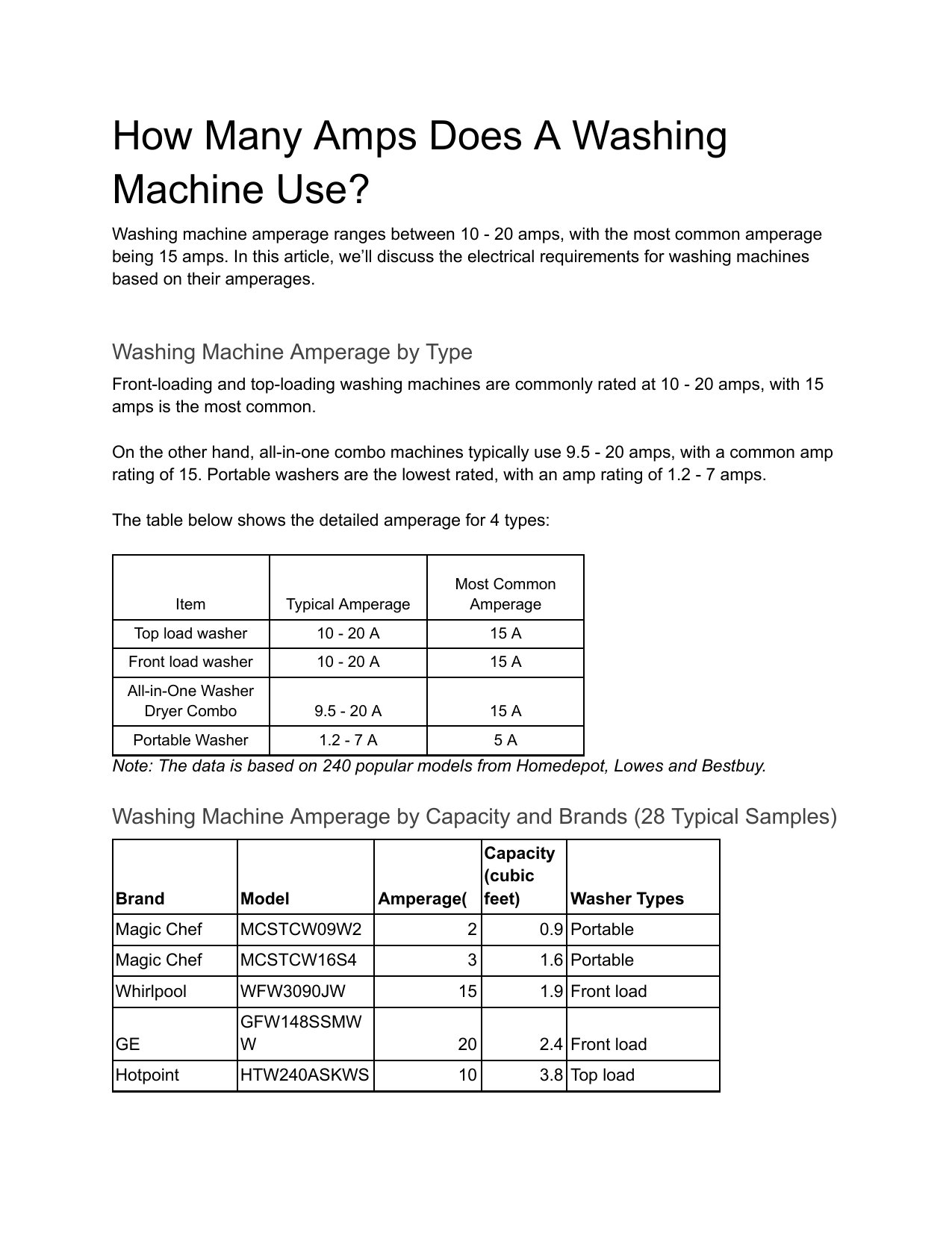
The typical current draw washing machine usually falls between 6 and 12 amps. Larger washers with stronger motors can require more current. Smaller or energy-efficient models use less. The rated load on the washing machine motor often determines the amperage.
Startup current amps are important. When the washer motor starts, it draws a surge of power. This startup surge can last a few seconds. The motor then settles to its rated load amperage. Understanding this helps select the right breaker size and wiring.
Below is a table showing common washing machine amperage by type and power rating.
| Washing Machine Type | Voltage (V) | Average Running Amps | Startup Surge Amps | Breaker Size (Amps) |
|---|---|---|---|---|
| Standard Top Load | 120 | 8-12 | 20-25 | 15-20 |
| High-Efficiency Front Load | 120 | 5-9 | 15-20 | 15 |
| Compact Portable | 120 | 4-7 | 10-15 | 15 |
Choosing the correct breaker size amps is key for safety. A breaker too small may trip during startup surge. One too large may not protect wiring properly. Wiring amps ratings must also meet or exceed the machine’s current needs.
For safety standards, always follow the manufacturer’s electrical requirements. Using a dedicated washing machine electrical circuit is best. This avoids sharing power with other heavy appliances that can cause overloads.
Washing Machine Electrical Circuit Requirements and Safety
Electrical wiring amps for washing machines must match or exceed the machine’s current rating. Most homes use copper wiring rated for 15 or 20 amps in circuits supplying washers. The wiring gauge and breaker size work together to prevent hazards.
Experts recommend a dedicated circuit for each washing machine. This means the washing machine is the only appliance on that circuit. It ensures stable power and reduces the risk of tripping breakers. It also complies with modern electrical safety standards.
Breaker size amps must consider the washing machine startup current amps. Typically, a 15-amp breaker protects most washers. Larger machines or those with higher startup surge may need a 20-amp breaker.
Proper wiring amps and breaker selection help protect the machine and home. Faulty wiring or wrong breaker sizes can cause overheating, fires, or appliance damage. Consult a licensed electrician for installations.
Below is a checklist to ensure washing machine electrical safety and proper power supply.
- ✅ Use a dedicated washing machine breaker size amps of 15 or 20 amps.
- ✅ Install wiring rated to handle the machine’s maximum current draw.
- ✅ Avoid sharing the circuit with other heavy household appliances.
- ✅ Follow manufacturer’s guidelines on electrical requirements.
- ✅ Check for grounding and proper outlet types per local codes.
Choosing the right wiring amps and breaker size amps is essential. It keeps your washing machine running smoothly and your home safe. For more details on installing a dedicated circuit, see expert advice on dedicated washer machine receptacle.
Energy Consumption and Efficiency of Washing Machines
Washing machines’ energy consumption depends on their power consumption and wash cycles. The typical washing machine amps used during operation relate directly to energy use measured in kilowatt hours (kWh). Efficient models use less electricity while providing good cleaning.

Newer washers often have better energy ratings. They use less water, electricity. And have motors designed for lower amperage. This reduces the overall household energy bills. Monitoring the washing machine load and amperage helps optimize energy use.
Choosing energy-efficient washers also reduces environmental impact. Many models in 2026 come with smart features to adjust power based on load size. This improves efficiency and lowers electrical consumption.
For those interested in the duration of power use, understanding how long washing machines take per cycle can help estimate total energy consumption.
Here is a quick facts box summarizing washing machine electrical use and energy efficiency.
- Average power use: 500 to 1500 watts
- Running amps: typically 5 to 15 amps
- Startup surge: 2 to 3 times running amps
- Recommended breaker: 15 to 20 amps
- Energy-efficient washers save up to 30% electricity
Conclusion
Understanding how many amps a washing machine uses is key for homeowners. It affects energy costs, safety. And appliance performance. Most washers draw between 5 and 15 amps under normal operation. Startup current amps can be much higher. So breaker size amps and wiring amps must accommodate this.
Installing a dedicated washing machine electrical circuit with proper breaker size is the best practice. It prevents hazards and ensures smooth operation. Energy-efficient models help reduce electrical consumption while maintaining cleaning power.
Following electrical safety standards and wiring amps recommendations protects your home and machine. For more on optimizing washing machine use and safety, explore tips on washing machine maintenance and dedicated circuit requirements.
| Aspect | Typical Value | Notes |
|---|---|---|
| Running Amps | 5-15 amps | Depends on model and load |
| Startup Surge Amps | 15-30 amps | Lasts a few seconds |
| Breaker Size | 15-20 amps | To handle surge safely |
| Voltage | 120 volts | Standard household supply |
Managing your washing machine’s electrical needs helps you save money and stay safe. It also keeps your home energy efficient in 2026 and beyond.
Frequently Asked Questions
What is the average amperage of a washing machine?
Most washing machines draw between 5 and 15 amps during normal operation, depending on their size and motor power.
Why does a washing machine need a dedicated electrical circuit?
A dedicated circuit prevents overloads and ensures the washing machine gets enough power for safe and efficient use.
What size breaker is recommended for washing machines?
Typically, a 15 to 20 amp breaker is recommended, but this depends on the washing machine’s electrical rating.
How does startup surge affect washing machine amperage?
When starting, washing machines can draw a higher current surge, sometimes 2 to 3 times the running amps, to power the motor.
Can using a washing machine on an incorrect circuit cause safety issues?
Yes, improper wiring or inadequate breaker size can cause electrical hazards, damage to the machine, or tripped breakers.

Michael Peterson is a home appliance writer focused on practical washing machine care, maintenance, and troubleshooting. He shares simple, reliable tips to help readers keep their washing machines running efficiently, avoid common problems, and extend appliance life.